Outage Heaters
Best Indoor Heater for Power Outage
We research every product against its spec sheet, manuals and owner reports. When you buy through our links we may earn a commission, at no cost to you. How we score · Disclosure
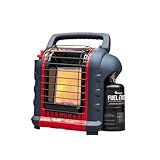
The best indoor heater for power outage for most people in 2026 is the Mr. Heater Portable Buddy Propane Heater. The go-to indoor emergency heater for most households: it warms one closed-off room, it is easy to run, and it carries the safety devices that matter.
The Mr. Heater Portable Buddy is the best indoor heater for a power outage in most homes: an indoor-rated 4,000/9,000 BTU propane heater with an oxygen depletion sensor, sized for a closed room of about 225 square feet. Room size, a battery CO alarm and whether you own a generator or power station change the answer. This guide covers seven picks, runtimes and the safety rules.
In most winter outage deaths, the cold is not the cause. Carbon monoxide is, produced by people trying to keep warm with the wrong equipment. A sound emergency heat plan comes down to a carbon monoxide alarm, a heater its manufacturer rates for indoor use, one closed-off room and plenty of blankets. The rest is detail.
Our top picks at a glance


Quick answer
the Mr. Heater Portable Buddy Propane Heater is our #1 pick (best overall indoor heater). The go-to indoor emergency heater for most households: it warms one closed-off room, it is easy to run, and it carries the safety devices that matter.
On this page
- 1. Best Indoor Heater for Power Outage: The Short Answer
- 2. The best indoor heaters for power outages right now
- 3. Indoor Heater for Power Outage Side by Side
- 4. Why Does a Gas Furnace Stop Working When the Power Goes Out?
- 5. How Long Does Each Option Keep You Warm?
- 6. Is It Safe to Use a Propane Heater Indoors?
- 7. Do You Need a Carbon Monoxide Alarm With an Indoor Heater?
- 8. Can a Portable Power Station Run a Space Heater?
- 9. How Do You Keep One Room Warm Without Electricity?
- 10. How Do You Keep Pipes From Freezing When the Power Is Out?
- 11. What Should Never Be Used to Heat a House Indoors?
- 12. Which Indoor Heater Should You Buy First?
- 13. Common Mistakes to Avoid
- 14. Frequently Asked Questions
1. Best Indoor Heater for Power Outage: The Short Answer
Buy a battery carbon monoxide alarm first, then a Mr. Heater Portable Buddy for one closed-off bedroom, or the Big Buddy if your warm room is a living room. All three Buddy heaters are sold as indoor-safe, with an oxygen depletion sensor and a tip-over shutoff. If you already own a power station, spend its energy on a heated throw rather than a space heater, and give every sleeper a cold-rated bag.
| Pick | Best For | Heat Output | Runs On | Indoor Safety |
|---|---|---|---|---|
| Mr. Heater Portable Buddy | One bedroom, about 225 sq ft | 4,000 / 9,000 BTU | One 1-lb propane cylinder | Maker-rated indoor-safe; ODS and tip-over shutoff |
| Mr. Heater Big Buddy | Living room, up to about 450 sq ft | 4,000 / 9,000 / 18,000 BTU | Two 1-lb cylinders | Maker-rated indoor-safe; ODS and tip-over shutoff |
| Mr. Heater Little Buddy | Small room or bathroom, about 95 sq ft | 3,800 BTU | One 1-lb cylinder | Maker-rated indoor-safe; ODS and tip-over shutoff |
| First Alert CO400 alarm | Every room with a heater | None | Batteries | Required beside any fuel-burning heater |
| Sunbeam heated throw | Sleeping, sitting | Body heat, low watts | Power station or AC | No combustion |
| Coleman North Rim 0-degree bag | Every sleeper | Your own body heat | Nothing | No combustion |
| Lasko 754200 ceramic heater | Generator owners | 1,500W, about 5,100 BTU on high | Generator or big battery | No combustion; tip-over and overheat cutoff |
2. The best indoor heaters for power outages right now

1. Mr. Heater Portable Buddy Propane Heater
See current price · Best for: Overall Indoor Heater
- Heat output
- 4,000/9,000 BTU
- Features
- Indoor-Safe, ODS + Tip-Over
When people talk about indoor propane heat, the Portable Buddy, model MH9BX, is usually the heater they have in mind. Mr. Heater rates it at 4,000 or 9,000 BTU per hour and markets it as indoor-safe. In practice that means two devices: an oxygen depletion sensor that shuts the burner off if oxygen in the room falls, and a tip-over switch that kills the flame if the heater gets knocked over. Those two features are the reason it made this list and a patio heater did not. It burns a single 1-lb propane cylinder. Working from the fuel math, a 1-lb cylinder holds a little over 21,000 BTU, which comes to roughly two to two and a half hours on high and about five on low, so low is the setting you will really live on. Run it in a room you have closed off, open a window or door to the size the manual calls for, keep it at least the stated distance from bedding and curtains, and never light it without a working CO alarm in the same room.
Pros
- Mr. Heater sells it as indoor-safe, fitted with an oxygen depletion sensor and a tip-over shutoff
- Two heat settings: low to carry you through the night, high to warm up a cold room
- Rated for roughly 225 square feet, about the size of a typical bedroom
- Burns a 1-lb propane cylinder and needs no electricity whatsoever
- Piezo ignition and a fold-down handle make it simple to light and set in place
Cons
- On high, a 1-lb cylinder lasts only a few hours, so keep a deep supply
- The manual requires a fresh-air opening, which lets some heat escape
- The front grille runs hot enough to burn skin and scorch fabric
2. Mr. Heater Big Buddy Propane Heater
See current price · Best for: Larger Rooms
- Heat output
- 4,000/9,000/18,000 BTU
- Features
- Indoor-Safe, Two Cylinders
Think of the Big Buddy, model MH18B, as a scaled-up Portable Buddy. Mr. Heater lists three settings, 4,000, 9,000 and 18,000 BTU, along with the same oxygen depletion sensor and tip-over shutoff, and it holds two 1-lb cylinders on board. Its rating covers spaces up to roughly 450 square feet, enough for a living room or a den where a family can gather with mattresses on the floor. The high setting exists to bring a cold room up to temperature, not to run all night. At 18,000 BTU an hour, two 1-lb cylinders last only a little over two hours by the fuel math, and the manual asks for a bigger fresh-air opening at higher output. Drop to low or medium once the room is warm. The fan genuinely helps in a larger room, and because it runs on D batteries it keeps working with the grid down. If your plan centers on one bedroom, the smaller Portable Buddy is easier and cheaper to keep fueled.
Pros
- Three settings reaching 18,000 BTU, enough for a living room or open family area
- Indoor-safe rating, with an oxygen depletion sensor and a tip-over shutoff
- Carries two 1-lb cylinders, about doubling the time between swaps
- An optional battery-powered fan spreads warmth across a larger room
Cons
- The high setting burns fuel quickly and calls for more ventilation
- Larger and heavier than the Portable Buddy
- More heater than a single bedroom needs

3. Mr. Heater Little Buddy Propane Heater
See current price · Best for: Small Rooms
- Heat output
- 3,800 BTU
- Features
- Indoor-Safe, Compact
Of the indoor-rated heaters in the Buddy line, the Little Buddy, model MH4B, is the smallest. Mr. Heater lists it at 3,800 BTU an hour for spaces up to about 95 square feet, with the same oxygen depletion sensor and tip-over protection as its siblings. The cylinder threads into the base, leaving a unit roughly the size of a large coffee can on a stand. The low output is deliberate. At 3,800 BTU an hour, a 1-lb cylinder runs for roughly five to six hours by the fuel math, enough to carry a small bedroom through much of the night with a single swap. It also suits a bathroom where you only need enough warmth to wash, or works as a second unit beside a Portable Buddy. In real cold it cannot keep up with a large room, and with no high setting it cannot recover a room that has already slipped into the 40s. Read the manual for altitude limits, since oxygen depletion sensors are sensitive to thin air.
Pros
- Compact and light, threading directly onto a 1-lb cylinder
- Same oxygen depletion sensor and tip-over shutoff as the larger Buddy models
- Modest 3,800 BTU output makes one cylinder last through more of the night
- Sized for a bathroom, a small bedroom or a tent
Cons
- Only one heat setting, with no high option
- The cylinder sits beneath it, so it stands tall and needs a stable, level surface
- Not enough output for anything bigger than a small room

4. First Alert CO400 Battery-Powered Carbon Monoxide Alarm
See current price · Best for: Must-Have First Purchase
- Features
- Battery CO Alarm, Works Without Grid Power
A hardwired CO alarm with no battery backup falls silent as soon as the power drops, which is precisely when people start bringing fuel-burning equipment indoors. The First Alert CO400 runs on batteries, so the state of the grid does not matter to it. It uses an electrochemical sensor and, as UL 2034 alarms are designed to do, sounds a loud alarm when carbon monoxide builds to a dangerous concentration over time. It is the least expensive insurance on this page and the item that matters most. Place one in the room where the heater runs, one in or near each sleeping area, and one on every level of the house. Test it before the season begins and again ahead of any outage you can see coming. Kidde and other brands sell equivalent battery-powered alarms, and some add a digital display showing lower levels before the alarm threshold, a useful extra if you can find one. The essentials are that it runs on batteries and that it sits in the room.
Pros
- Runs on batteries, so it keeps protecting you through the outage
- Its electrochemical sensor triggers a loud alarm at dangerous CO levels
- Compact enough to sit in the exact room where the heater runs
- Cheap enough to buy one for every sleeping area
Cons
- No digital display, so low but rising levels stay invisible
- The alarm and its batteries have a limited service life; replace them on schedule

5. Sunbeam Microplush Heated Throw Blanket
See current price · Best for: Electric Option
- Features
- Low-Watt Electric, Power Station Friendly
Own a power station? In the cold, the most effective use for it is heating people rather than air. A heated throw such as Sunbeam's Microplush model puts warmth right against your body, under a blanket that also holds it in, and heated throws and blankets of this type typically draw well under 100 watts, often far less on low settings. Check the label on the one you buy. The gap is huge. A 1,500-watt space heater drains a 1kWh power station in well under an hour, while a heated throw drawing around 50 watts runs for most of a night on that same battery. Add a sleeping bag or a pile of comforters and you have a bed that stays warm even as the room slides into the 50s. Sunbeam throws include an auto shutoff for safety, which is good, though it means someone may wake up to restart it. Use it on top of you rather than folded or tucked under a mattress, and follow the manufacturer's instructions.
Pros
- Uses a small fraction of the power a space heater pulls
- Warms the person instead of the room, which is far more efficient
- A mid-size power station can keep one going through a night
- Earns its keep every winter, not only during outages
Cons
- Requires a power station, generator or some other AC source
- Does nothing for the pipes or the room temperature
- Auto shutoff timers may need resetting during the night

6. Coleman North Rim 0 Degree Mummy Sleeping Bag
See current price · Best for: Zero-Energy Heat
- Features
- Cold-Rated Sleeping Bag, No Fuel or Power
Few pieces of emergency heat gear are as underrated as a good sleeping bag. It burns nothing and draws nothing, and it turns your own body into the heat source. The Coleman North Rim is a widely sold synthetic mummy bag rated to 0 degrees Fahrenheit, far colder than the inside of a house gets in all but the longest outages. Read that number as a survival limit, not a comfort promise; most people are comfortable well above a bag's rated low. Indoors, that margin is exactly what you want. A family sleeping in cold-rated bags in one closed-off room can get through a night in the 40s with no heater at all, leaving a small propane heater to simply take the edge off in the evening. Put a foam pad or a mattress beneath the bag, because the floor draws heat away faster than air does. If a mummy bag feels too confining, a rectangular bag with a lower rating plus a wool blanket also works.
Pros
- Requires no fuel, no electricity and no ventilation
- The mummy hood holds heat around your head and shoulders
- Rated for far colder conditions than an indoor room will reach
- Serves as camping gear the rest of the year
Cons
- Some sleepers find the mummy shape confining
- Synthetic fill takes up a lot of storage space
- Temperature ratings assume ideal conditions; add layers if you sleep cold
7. Lasko 754200 Ceramic Space Heater
See current price · Best for: Generator Owners
- Features
- 1,500W Ceramic, Low Setting, Tip-Over Safety
Part of the reason this heater is here is as a caution. The Lasko 754200 is a widely sold small ceramic heater with a 1,500-watt high setting, a lower setting, tip-over protection and an overheat cutoff. As an electric heater it is perfectly good. It is simply a poor partner for most battery backup. At 1,500 watts, a 1kWh power station lasts roughly 35 to 40 minutes once inverter losses are factored in, and the low setting adds only a little more time. It earns its place alongside a generator running outside, a whole-home battery system, or a large portable station that you can recharge from solar or a generator. Electric resistance heat gives off no combustion gases, a real advantage in a closed room, and a ceramic heater with tip-over protection is safer than any open flame. Plug it straight into the station or into a heavy-duty cord rated for the load, keep three feet of clearance from anything that can burn, and never leave it running unattended.
Pros
- Electric, so there is no combustion and no carbon monoxide
- A low setting cuts the draw below the 1,500W maximum
- Tip-over and overheat protection
- Small, inexpensive and backed by a long track record
Cons
- Even on low, it empties a portable power station in hours or less
- Only truly practical on a generator or a large home battery
- Heats one small space and nothing more
3. Indoor Heater for Power Outage Side by Side
| Product | Score | Price | Features | Buy |
|---|---|---|---|---|
| Mr. Heater Portable Buddy Propane Heater Best Overall Indoor Heater | 93 | See current price | Indoor-Safe, ODS + Tip-Over | Amazon → |
| Mr. Heater Big Buddy Propane Heater Best for Larger Rooms | 91 | See current price | Indoor-Safe, Two Cylinders | Amazon → |
| Mr. Heater Little Buddy Propane Heater Best for Small Rooms | 88 | See current price | Indoor-Safe, Compact | Amazon → |
| First Alert CO400 Battery-Powered Carbon Monoxide Alarm Must-Have First Purchase | 85 | See current price | Battery CO Alarm, Works Without Grid Power | Amazon → |
| Sunbeam Microplush Heated Throw Blanket Best Electric Option | 83 | See current price | Low-Watt Electric, Power Station Friendly | Amazon → |
| Coleman North Rim 0 Degree Mummy Sleeping Bag Best Zero-Energy Heat | 81 | See current price | Cold-Rated Sleeping Bag, No Fuel or Power | Amazon → |
| Lasko 754200 Ceramic Space Heater Best for Generator Owners | 78 | See current price | 1,500W Ceramic, Low Setting, Tip-Over Safety | Amazon → |
4. Why Does a Gas Furnace Stop Working When the Power Goes Out?
Because almost every modern furnace depends on electricity, even one that burns natural gas or propane. Its igniter, its control board, the inducer fan that pushes exhaust out and the blower that moves warm air through the ducts all run on household current. With the grid down, a gas furnace goes cold as surely as an electric heat pump does. Most boilers behave the same way, since their circulator pumps and controls need power, and so do pellet stoves, which rely on electricity for the auger and fans.
What are the three ways to stay warm?
You can put power back into the heating system itself, which is the job of a correctly installed generator or home battery with a transfer switch. You can add a separate heat source that does not need the grid, which in practice means an indoor-rated propane heater or a wood stove you already own. Or you can cut how much heat you need by closing off a room, insulating people rather than air, and protecting the parts of the house that freeze first.
Can you keep the furnace running instead?
That first route is the most comfortable and the most expensive. A furnace blower typically draws a few hundred watts, with startup spikes higher than that, which puts it within reach of a large power station or a mid-size generator that an electrician connects through an inlet and transfer switch. Our guide to the best home generators for power outages explains sizing, and the best home battery backup systems can run a gas furnace quietly if they are wired to its circuit.
What is this guide trying to achieve?
Everything below covers the second and third routes: what to do without whole-house backup, or once an outage outlasts it. The target is modest and specific. Hold one room in the 60s, keep people warm enough to sleep, stop the pipes from freezing, and manage all of it without filling the house with carbon monoxide. Each recommendation is built around that target, and anything that fails the last part was left off the list.
5. How Long Does Each Option Keep You Warm?
A 1-lb propane cylinder gives a Buddy heater hours of heat, while a 1kWh battery gives a space heater well under one. BTU ratings here are the manufacturer's; runtimes are worked out from those ratings and the energy in a standard 1-lb propane cylinder, or from rated wattage and battery size for the electric options. Altitude, temperature and how full the cylinder was to begin with all move real runtimes, so treat these as planning figures rather than promises.
| Option | Rough Runtime | Based On |
|---|---|---|
| Mr. Heater Portable Buddy | About 5 hr low, 2-2.5 hr high | One 1-lb cylinder, a little over 21,000 BTU |
| Mr. Heater Big Buddy | About 10 hr low, 2+ hr high | Two 1-lb cylinders |
| Mr. Heater Little Buddy | About 5-6 hr | One 1-lb cylinder at 3,800 BTU |
| Heated throw | Most of a night on 1kWh | Around 50W draw |
| 0-degree sleeping bag | Unlimited | Nothing to run out of |
| 1,500W ceramic heater | Under 40 min on 1kWh | High setting, after inverter losses |
| Battery CO alarm | Years | Batteries, replaced by its service life |
Why does propane beat batteries for heat?
The first lesson is how little heat an electric heater makes for the power it eats. A 1,500-watt heater turns out about 5,100 BTU an hour, roughly what a Portable Buddy makes on a setting between low and high, yet it would flatten a 1kWh battery before the propane heater finished its first hour. Propane packs an enormous amount of energy into a small, cheap cylinder, and that is exactly why it is the practical choice for heat off the grid.
Why do the cheapest options last the longest?
The second lesson is that the rows needing no fuel at all are also the cheapest. A sleeping bag rated well below freezing and a heated throw on a modest battery keep people warm for days, with no combustion risk. The best plans use propane to make one room comfortable for a few hours each evening and morning, then let bedding do the work overnight, when everyone is asleep and least able to notice a problem.
How many cylinders should you stock?
Work it out from your own plan. Decide how many hours a day the heater will run and on which setting, then use the per-cylinder times above: roughly two to two and a half hours on high or about five on low for a Portable Buddy. Multiply your daily heater hours by the number of days you want to cover and divide by that per-cylinder time. Then add margin, because cold weather and partly used cylinders shorten runtime, and keep the spares stored outdoors.
6. Is It Safe to Use a Propane Heater Indoors?
Yes, if the manufacturer designs, tests and labels the heater for indoor use, and only if you run it exactly as the manual says. The Mr. Heater Buddy models carry two safety devices that make that possible. An oxygen depletion sensor, usually shortened to ODS, cuts the burner if oxygen in the room falls below a set level. A tip-over switch kills the flame if the heater is knocked over. Heaters sold for patios, garages, job sites or ice fishing often lack one or both, and they are no substitute.
What does the oxygen depletion sensor actually do?
It reacts to low oxygen, not to carbon monoxide directly. A healthy burner with enough fresh air produces very little CO, and the ODS is there to shut everything down before the air in a sealed room deteriorates to the point where combustion turns incomplete. That makes it a good safety device. It is not a carbon monoxide alarm, though, and it is no excuse to skip one. Dust, damage and altitude can all change how a sensor behaves, which is one more reason to keep a separate alarm.
How much ventilation does an indoor-rated heater need?
The amount its manual specifies, every time. The manuals call for a fresh-air opening of a minimum size, which in practice means opening a window or an outside door by the amount listed for your heater and setting. Letting cold air in on purpose feels backward. Do it regardless. The heater consumes oxygen and gives off water vapor and carbon dioxide, and a small, steady flow of outside air is what keeps the room safe to breathe.
Where should the heater sit, and can it run overnight?
Clearance and placement count as much as airflow. Set the heater on a hard, level floor, out of foot traffic, at least the manual's stated distance from curtains, bedding, furniture and anything else that burns, and beyond the reach of children and pets. Do not sleep with a heater running unless the manual explicitly permits it, and even then many safety agencies advise against it. Switch it off before bed and let the sleeping bags take over.
Can you hook a 20-lb tank to a heater indoors?
No. Use 1-lb disposable cylinders indoors, connect and disconnect them outside when you can, and check fittings for leaks with soapy water, never a flame. Keep the 20-lb barbecue tank out of the living space; fire codes generally prohibit storing or using full-size cylinders indoors, and the Buddy hose-and-filter setups do not get around that. Store spare cylinders outdoors, out of direct sun, and never in a basement.
What about kerosene heaters?
They were left off this list on purpose. Whether a kerosene heater may be used indoors depends on state and local rules, and its fuel handling and ventilation demands are higher than those of an indoor-rated propane heater on small cylinders.
7. Do You Need a Carbon Monoxide Alarm With an Indoor Heater?
Yes, always, and it has to run on batteries. Carbon monoxide has no color and no smell, and early poisoning symptoms pass for flu: headache, dizziness, nausea, fatigue. Sleeping people cannot notice them at all. CO poisonings reliably climb after major winter storms and outages, nearly always because a generator, grill or other fuel-burning device ran indoors or too close to the house. An alarm is the only thing that dependably catches it.
Will your hardwired alarm work in an outage?
Maybe not. Many homes depend on hardwired CO alarms, some of which have no battery backup, and those go silent the moment the grid fails. Check yours. If an alarm has no battery, or its battery is years old, buy battery-powered alarms such as the First Alert CO400.
Where should the alarms go?
Put them where the risk will be: in the room with the heater, in or near every sleeping area, and on each level of the house. Combination smoke and CO alarms also work, provided they run on batteries. Test the alarms before the season and change batteries on schedule. Every CO alarm also has a printed service life, after which its sensor can no longer be trusted, so replace the whole unit when it expires.
What should you do if the alarm goes off?
Do not hunt for the source. Turn the heater off if you can do it immediately, get everyone outside into fresh air, and call 911 or the fire department once you are out. Stay outside until responders tell you it is safe to go back in.
THE ALARM COMES FIRST
No battery CO alarm, no fuel-burning heater indoors.
Treat the alarm as the gate for everything else on this page. Without a working battery-powered CO alarm, no fuel-burning heater belongs inside, whatever its label says. With one in place, an indoor-rated propane heater run according to its manual is a reasonable and widely used emergency heat source. Without one, it is a gamble you have no reason to take.
8. Can a Portable Power Station Run a Space Heater?
Only briefly. A power station is the obvious outage answer for phones, lights, a fridge and a CPAP, but for heat it is mostly the wrong tool. Electric resistance heaters turn electricity into heat at 100 percent efficiency, yet heat simply takes a lot of energy. A standard space heater pulls 1,500 watts on high. A 1kWh power station stores about 1,000 watt-hours and, after inverter losses, delivers something nearer 850 or 900. Divide one by the other and the heater runs for roughly 35 to 40 minutes.
Runtime on a 1kWh Power Station (Approximate)
~35 min
1,500W space heater on high
~1 hr
750-900W heater on low
~15 hr
50W heated throw
Days
Phones, lights and a router
Does the low setting help?
Less than most people expect. A low setting of 750 to 900 watts roughly doubles runtime to about an hour, barely enough to take the chill off a room before the battery is empty, and the room cools again within an hour of the heater stopping. Even a large 4kWh home-backup station buys only a few hours of space heating, and that is energy you probably wanted for the refrigerator and medical equipment.
What should stored power heat instead?
People, not rooms, which changes the math entirely. A heated throw or blanket typically draws somewhere in the 50 to 100 watt range, so the same 1kWh station runs one for most of a night, and a larger unit runs two or three. Electric mattress pads, heated vests powered by USB power banks and 12V heated car blankets all work on the same principle. If you are shopping for a station with winter in mind, our guides to the best portable power stations and the best power stations for home backup show which sizes cover the fridge, the CPAP and a couple of heated blankets together.
What if you want electric space heat anyway?
Plan on a generator rather than batteries. A generator running safely outdoors, at least 20 feet from doors and windows, can carry a 1,500-watt heater for as long as the fuel lasts. A solar-charged power station can keep low-watt loads going indefinitely, as our solar generator guide explains, but winter sun rarely refills a battery quickly enough to feed a space heater. Spend stored energy where it stretches furthest: blankets, lights, and the devices that keep people informed and safe.
9. How Do You Keep One Room Warm Without Electricity?
Stop trying to heat the whole house; it is the single most effective change you can make in a cold-weather outage. Choose one room, close it off, move everyone into it, and let a small indoor-rated heater and good bedding do the rest.
Which room should you pick?
Ideally a smaller interior room on the side of the house away from the wind, with few exterior walls and windows. A Portable Buddy rated for about 225 square feet can make a closed bedroom comfortable; it has no chance against an open-plan first floor.
How do you hold the heat in?
Shut the doors to every other room and lay rolled towels along the gaps beneath them. Hang blankets over windows and over doorways that have no door, and draw heavy curtains. Keep north-facing windows covered, but open south-facing ones during sunny hours to collect free heat, closing them again before dusk. A tent or blanket fort inside the room, particularly over a bed, holds body heat remarkably well, and children often enjoy it rather than endure it.
What should everyone wear and eat?
Dress for the room instead of heating the room to suit your clothes. Wool or synthetic base layers, a fleece, a warm hat and dry socks matter more than a few degrees of air temperature, and cotton is a poor choice because it holds moisture. Eat regular meals and drink warm drinks if you can heat water safely, since digesting food generates body heat. Keep moving in the daytime; sitting still in a cold room is when people get chilled.
How do you get through the night?
Let bedding carry the load. One cold-rated sleeping bag per person, a pad or mattress underneath, and a heated throw on a power station for anyone who runs cold make a complete plan for the sleeping hours. Turn the propane heater off before bed, confirm the CO alarm works, and light the heater again in the morning once everyone is awake. Keep a good battery light within reach so nobody lights a candle; our guide to the best emergency lanterns covers models that last for days on a charge.
What if someone relies on medical equipment?
Then the priorities change: anyone on a CPAP, oxygen concentrator or other powered device needs that load covered first and heat second. A CPAP with its heated humidifier off draws little enough to run several nights on a mid-size station, and our CPAP battery backup guide explains how to size one. When a long outage, severe cold and medical needs combine, the right move is often to relocate to a warming center or to a relative who has power.
10. How Do You Keep Pipes From Freezing When the Power Is Out?
Keep water moving, let room air reach the pipes, and drain the system if the house heads toward freezing. Pipes freeze before people do. Water lines in exterior walls, crawl spaces, unheated garages and under sinks on outside walls are at risk once temperatures near them fall well below freezing, and a burst pipe can cause more damage than the outage itself. The warm-room plan protects people; it does nothing for the plumbing in the rest of the house.
What should you do in the first hours?
Open the cabinet doors under kitchen and bathroom sinks so room air reaches the pipes, and let faucets on exterior walls drip slowly, hot and cold both. Moving water is much harder to freeze, and an open faucet relieves pressure if ice forms anyway. Find your main water shutoff and make sure it turns before you need it.
When should you drain the system?
When the outage looks long and the house is sliding toward freezing. Shut off the main, open the lowest and highest faucets, and flush the toilets to empty their tanks. Shut off power or gas to the water heater according to its manual before draining lines that feed it. Plumbers recommend this step for vacant houses in winter, and it removes the risk completely.
How do you thaw a frozen pipe safely?
Never with an open flame or a propane heater aimed at it. Use warm towels, or a hair dryer once power returns, and work from the faucet end back toward the frozen section so melting water has somewhere to go. If a pipe has already burst, shut off the main water before doing anything else.
11. What Should Never Be Used to Heat a House Indoors?
Generators, grills, camp stoves, ovens, outdoor patio heaters and any heater not labeled for indoor residential use. Every winter storm produces the same headlines from the same short list of causes.
Generators
Never run a portable generator inside a home, garage, basement, crawl space or shed, even with doors and windows open. Run it outdoors, at least 20 feet from the house, with the exhaust aimed away from doors, windows and vents. A garage with the door up still counts as inside. Generators make carbon monoxide fast enough to kill within minutes in an enclosed space.
Grills, camp stoves, patio heaters and ovens
Never heat indoors with a charcoal or gas grill, a camp stove, a turkey fryer or an outdoor patio heater. None of them has an oxygen depletion sensor, and a lit charcoal grill in particular produces large amounts of CO with no visible smoke. Never warm a room with a gas oven or range either; they are not built for it, and an oven left open for hours can produce dangerous CO levels. Candles carry a fire risk out of all proportion to the heat they give.
Garage and job-site heaters
Heaters sold for garages, workshops and construction sites, including forced-air propane torpedo heaters and many tank-top heaters, are designed and labeled for well-ventilated spaces. The label is what decides. If a heater does not state that it is approved for indoor residential use, treat it as an outdoor heater, however a listing or a forum describes it.
What about a fireplace or wood stove?
One you already use is a different case. With an inspected chimney and a stove or fireplace in good condition, it is an excellent outage heat source, but a storm is no time to experiment with one you have not lit in years. A cracked flue or a chimney fire mid-storm, with emergency services stretched thin, stacks one disaster on top of another.
12. Which Indoor Heater Should You Buy First?
Buy the alarm, then the sleeping bags, then a Portable Buddy, in that order. The sequence matters because the first two purchases protect everyone whether or not a heater ever gets lit.
Start with the alarm and the sleeping bags
Get a battery-powered CO alarm such as the First Alert CO400 for every level of the house and every sleeping area, plus one more for the room where the heater will run. If you do nothing else on this list, do this. Next, buy one cold-rated sleeping bag, such as the Coleman North Rim, for each person in the household. Those two purchases handle the most dangerous and the most common outage problems with no fuel or power at all.
Which Buddy heater fits your room?
For real heat, the Mr. Heater Portable Buddy is the right first heater for most homes. It warms a closed bedroom, runs on cylinders that store for years, and carries the safety devices that make indoor use reasonable. If the warm room is a living room or the household is large, pick the Big Buddy and plan to run it on low or medium after the first warm-up. If you only need to take the chill off a bathroom or small bedroom, or want a second unit, the Little Buddy fits. Stock enough 1-lb cylinders for several days at a few hours of use a day.
Already own a power station or generator?
With a power station, add a heated throw like Sunbeam's to the kit and plan to spend stored power on people, not rooms. With a generator or a large home battery, a small ceramic heater like the Lasko 754200 makes sense as clean electric heat for one room. On a typical portable station, skip it. Still deciding how to back up the house? Our guides to the best home generators and the best portable chargers for power outages cover the rest of the kit.
Write the plan down
Last, put the plan on paper and walk through it once before the cold arrives. Know which room you will use, where the cylinders and alarms live, how to shut off the water, and which temperature or forecast sends you to a warming center or a relative's house instead. The heater is the least important part of that plan. Knowing when to use it, and when to leave, matters more.
13. Common Mistakes to Avoid
Running Any Heater Without a Battery CO Alarm
Hardwired CO alarms without battery backup go quiet during an outage, exactly when fuel-burning heaters move indoors. An indoor-rated heater is only one part of the safety system. Place a battery-powered alarm in the same room and near every sleeping area, and test it, before you light anything at all.
Using an Outdoor Heater, Grill or Generator Inside
Patio heaters, tank-top heaters, torpedo heaters, grills, camp stoves and generators are not indoor appliances, whether a window is open or the garage door is up. They have no oxygen depletion sensor and can produce lethal carbon monoxide within minutes. Unless the label says indoor residential use, it stays outside.
Skipping the Fresh-Air Opening
Indoor-rated propane heaters still consume oxygen, and their manuals call for a fresh-air opening of a set size. Sealing the room tight to trap heat defeats the design and can trip the oxygen sensor, or worse. Open the window or door by the amount the manual specifies every single time the heater runs.
Trying to Heat a Room From a Power Station
A 1,500-watt heater drains a 1kWh power station in roughly 35 to 40 minutes, and an hour later the room is cold again. Put stored energy into heated blankets, which draw a small fraction as much, and into the fridge, lights and medical devices that cannot run on anything else.
Heating the Whole House Instead of One Room
A small propane heater cannot keep pace with an open-plan floor, so it chews through cylinders while the house stays cold. Pick one small interior room, close it off, block the drafts and hang blankets over the windows. A Portable Buddy can make that room comfortable on a fraction of the fuel.
14. Frequently Asked Questions
What is the safest indoor heater for a power outage?
The safest choices burn nothing: cold-rated sleeping bags, layered clothing and a heated blanket running from a power station. For real room heat without electricity, pick a propane heater its maker rates for indoor use, such as the Mr. Heater Buddy series with its oxygen depletion sensor and tip-over shutoff. Always run it with a battery-powered CO alarm and the ventilation the manual requires.
Is the Mr. Heater Buddy really safe to use indoors?
Mr. Heater markets the Buddy series as indoor-safe, and each heater has an oxygen depletion sensor and a tip-over shutoff. Indoor use is reasonable if you follow the manual: open the specified fresh-air gap, keep the stated clearance from anything that burns, use 1-lb cylinders inside, and keep a working battery CO alarm in the room. Many safety agencies advise switching it off before sleep.
How long does a 1-lb propane cylinder last in a Buddy heater?
A 1-lb cylinder holds a little over 21,000 BTU. Burning 9,000 BTU an hour, that comes to roughly two to two and a half hours; at 4,000 BTU it is about five hours. The 3,800 BTU Little Buddy gets about five to six hours. Cold weather and partly used cylinders cut those times, so keep more cylinders on hand than the math suggests.
Can I run a space heater on a portable power station?
Yes, though only briefly. A 1,500-watt heater empties a 1kWh station in roughly 35 to 40 minutes, and a low setting stretches that to only about an hour. The same energy goes much further in a heated blanket, which can run for most of a night on that battery. Save space heaters for generators or large whole-home batteries.
How do I heat my house without electricity?
Focus on one small room rather than the whole house. Close it off, block drafts, cover the windows and bring everyone in. While people are awake, run an indoor-rated propane heater with a CO alarm and the required ventilation, then let cold-rated sleeping bags and layered clothing carry the night. A wood stove or fireplace you already have also works if it is inspected and sound.
Can I use my gas oven or stove to heat the house?
No. Gas ovens and ranges are not built to be space heaters, and running one for hours with the door open can produce dangerous carbon monoxide levels while adding a fire risk. Camp stoves and grills of every type fall in the same category. Heat only with appliances labeled for indoor residential use, and keep a battery CO alarm working whenever anything burns indoors.
Should I buy a kerosene heater for power outages?
Kerosene heaters are not on this list. Whether one may be used indoors depends on state and local rules, the fuel needs careful storage and outdoor refueling, and the heaters demand generous ventilation. For most homes, an indoor-rated propane heater on 1-lb cylinders is simpler to store and run safely. If you are weighing kerosene anyway, read your local codes and the manual first.
Related Guides
Home & Portable Generators
Best Home Generator for Power Outages
The Generac Guardian 22kW leads 7 outage generators; essentials alone need about 3,500 to 5,000 running watts, and a sump or well pump pushes that higher.
Portable Power Stations
Best Portable Power Station for Home Backup
The EcoFlow Delta Pro 3 leads 6 power stations for home backup; a 4kWh-class unit on a transfer switch runs a fridge, sump pump and lights for roughly a day.
Emergency Lanterns
Best Emergency Lantern
The Goal Zero Lighthouse 600 is the best main outage lantern, and 200 to 300 lumens lights a living room. 7 picks, from rechargeable lanterns to a headlamp.
The Bottom Line
Emergency heat is a system rather than a single purchase. A battery carbon monoxide alarm, a cold-rated sleeping bag for each person and one closed-off room do most of the work, and together they cost less than a heater. Add a Mr. Heater Portable Buddy, or a Big Buddy for a bigger room, and you can keep that room comfortable for days on cylinders stored safely outdoors.
Spend battery power on blankets instead of space heaters, and never bring a generator, grill or outdoor heater inside. If the cold, the length of the outage or someone's medical needs outrun your plan, go to a warming center. Making that call is part of the plan too.