Portable Power Stations
Best Portable Power Station
We research every product against its spec sheet, manuals and owner reports. When you buy through our links we may earn a commission, at no cost to you. How we score · Disclosure
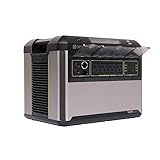
The best portable power station for most people in 2026 is the EcoFlow DELTA 2 Battery Station. The best balance of capacity, output, charge speed and price for outage backup in a typical home.
The EcoFlow DELTA 2 LFP is the best portable power station for most homes, and a 1,000Wh unit like it keeps a typical fridge running for roughly 6 to 14 hours. Your heaviest load and how you will recharge during a long outage change the pick. Below: seven stations from 245Wh to 2,048Wh, runtime math, LiFePO4 vs NMC, charging, outage tactics and sizing.
Inside every portable power station is the same trio: a battery, an inverter and a charger. It stores energy and never makes any, so the real buying question is not which brand to pick but how many watt-hours your loads burn through in a day, and how you plan to refill the battery once the grid goes down.
Our top picks at a glance



Quick answer
the EcoFlow DELTA 2 LFP Power Station is our #1 pick (top pick for most homes). The best balance of capacity, output, charge speed and price for outage backup in a typical home.
On this page
- 1. Best Portable Power Station: The Short Answer
- 2. The best portable power stations right now
- 3. Portable Power Station Side by Side
- 4. What Size Portable Power Station Do You Need?
- 5. What Is the Difference Between Watt-Hours and Watts?
- 6. How Long Will a Portable Power Station Run a Fridge, CPAP or Router?
- 7. Is LiFePO4 Better Than NMC for a Power Station?
- 8. How Do You Recharge a Power Station When the Power Is Out?
- 9. How Do You Use a Power Station During a Power Outage?
- 10. Which Power Station Features Are Worth Paying For?
- 11. Is a Power Station Better Than a Gas Generator?
- 12. How Should You Store a Power Station, and How Long Does It Last?
- 13. Everything Else About Portable Power Stations
- 14. Common Mistakes to Avoid
- 15. Frequently Asked Questions
1. Best Portable Power Station: The Short Answer
The EcoFlow DELTA 2 LFP is the best portable power station for most homes: 1,024Wh of LiFePO4, 1,800W continuous and an expansion port, at roughly $450 to $650. Choose the Jackery Explorer 1000 v2 for lighter, simpler grab-and-go use, the Anker SOLIX C1000 for the quickest refill, and the 2,048Wh Bluetti AC200L for a full day of fridge and freezer. Under 300Wh, the RIVER 3 and EB3A cover phones, routers and CPAPs.
| Pick | Best for | Capacity | Output | Chemistry |
|---|---|---|---|---|
| EcoFlow DELTA 2 LFP | Most homes; expandable backup | 1,024Wh | 1,800W continuous | LiFePO4 |
| Jackery Explorer 1000 v2 | Light, simple grab-and-go | 1,070Wh | 1,500W (3,000W surge) | LiFePO4 |
| Anker SOLIX C1000 | Fastest refill; UPS duty | 1,056Wh | 1,800W continuous | LiFePO4 |
| Bluetti AC200L | A full day of essentials | 2,048Wh | 2,400W continuous | LiFePO4 |
| Goal Zero Yeti 1500X | Rugged off-grid use | 1,516Wh | 2,000W continuous | NMC |
| EcoFlow RIVER 3 | Phones, lights, router; apartments | 245Wh | 300W continuous | LiFePO4 |
| Bluetti EB3A | Small appliances under $300 | 268Wh | 600W continuous | LiFePO4 |
2. The best portable power stations right now

1. EcoFlow DELTA 2 Battery Station
See current price · Best for: Silent Indoor Option
- Battery
- 1,024Wh LFP Battery
- Features
- 1,800W Output
The DELTA 2 belongs to the class that makes the most sense for outage backup: about a kilowatt-hour of storage, enough output to start a refrigerator, and a built-in AC charger. EcoFlow rates it at 1,024 watt-hours of LiFePO4 capacity, 1,800 watts continuous, and roughly 3,000 cycles before capacity drops to 80 percent, which adds up to years of regular use. A modern refrigerator averaging around 100 watts runs for most of a day on it, and a CPAP without its heated humidifier can run for several nights. It refills from a wall outlet quickly, typically reaching 80 percent in under an hour, and takes solar input for longer outages. The expansion port means you can add an extra battery later rather than buying a second station. Owners commonly mention the fan noise during fast charging, and that at 27 pounds it is more home appliance than backpack gear. Expect roughly $450 to $650 at the time of writing.
Pros
- 1,024Wh of LiFePO4 storage, rated for about 3,000 cycles to 80 percent capacity
- 1,800W continuous output runs a full-size refrigerator, a microwave or a coffee maker
- Fast AC recharging with no external power brick
- An extra battery can roughly double or triple capacity
- Six standard AC outlets plus USB-C and a car port
Cons
- About 27 pounds, which is heavier than it looks
- The fan is audible during fast charging
- X-Boost mode lowers the voltage rather than genuinely powering bigger loads

2. Jackery Explorer 1000 v2 Portable Power Station
See current price · Best for: Easiest to Live With
- Battery
- 1kWh LFP
- Features
- 1,500W, Light
The Explorer 1000 v2 is the one to buy if you want a kilowatt-hour of LiFePO4 storage that a non-technical member of the household can carry and run. Jackery rates it at 1,070 watt-hours, 1,500 watts continuous and 3,000 watts surge, enough for a refrigerator, lights, a modem and phones, or a microwave on its own. At about 24 pounds it weighs a few pounds less than most 1kWh rivals, and the front panel is simply laid out. Through the app you can unlock an emergency fast-charge mode that refills it from a wall outlet in about an hour, though slower charging is gentler on the battery for everyday use. Solar input pairs with Jackery's folding panels. What you give up is room to grow: there is no expansion battery port, so if your needs outgrow it, you will be buying a second station. The five-year warranty is a real advantage. Expect roughly $400 to $600 at the time of writing, and it is often on sale.
Pros
- 1,070Wh LiFePO4 battery in a case of roughly 24 pounds
- 1,500W continuous and 3,000W surge for compressor starts
- An app-enabled emergency fast charge fills it in about an hour
- A plain, clearly labeled front panel anyone in the house can use
- Five-year warranty
Cons
- Cannot be expanded
- Fewer AC outlets than some rivals
- Less continuous output than the DELTA 2 and the Anker C1000
3. Anker SOLIX C1000 Portable Power Station
See current price · Best for: Fastest Refill
- Battery
- 1kWh LFP
- Features
- 1,800W, Rapid Recharge
The SOLIX C1000 goes head to head with the DELTA 2 and beats it on one specification that counts in on-and-off outages: charging speed. Anker rates it at 1,056 watt-hours of LiFePO4 capacity and 1,800 watts continuous, and its UltraFast mode refills it from a wall outlet in under an hour. That is valuable during rolling blackouts, or when you run a gas generator an hour at a time, because a fast refill makes every hour of engine time count. It also works as an uninterruptible power supply, switching to battery within milliseconds, which keeps a modem, router or desktop running through brief flickers. An expansion battery is available, and owners appreciate the built-in light bar during outages. At around 27 to 28 pounds, it weighs about the same as other 1kWh LFP units. Expect roughly $450 to $650 at the time of writing.
Pros
- 1,056Wh of LiFePO4 and 1,800W continuous output
- A full recharge from a wall outlet in under an hour in UltraFast mode
- Very short switchover in UPS mode for a desktop or modem
- An expansion battery is available
- Built-in light bar for outages
Cons
- Weighs around 27 to 28 pounds
- The UPS switchover is quick but not a substitute for everything a true online UPS protects

4. Bluetti AC200L Expandable Power Station
See current price · Best for: Most Capacity for the Money
- Battery
- 2kWh LFP
- Features
- 2,400W, Expandable
Twice the battery of the 1kWh class changes what a power station can do in an outage, and the AC200L is one of the better-value ways to get there. Bluetti rates it at 2,048 watt-hours of LiFePO4 storage and 2,400 watts continuous output, and expansion batteries let you build out to several times the base capacity. In practical terms, that is a refrigerator, a chest freezer, a modem and lights through a full day, or a CPAP for a week of nights. The outlet panel is wide and includes a 30A RV-style outlet. The cost is weight: at over 60 pounds it is an appliance you move once, not a campsite companion, and filling twice the battery naturally takes longer from solar. For outage use where you want silence overnight and a refill from solar or a generator during the day, this class hits the sweet spot. Expect roughly $900 to $1,400 at the time of writing.
Pros
- 2,048Wh of LiFePO4 base capacity
- 2,400W continuous output
- Bluetti add-on batteries extend it for multi-day outages
- A broad outlet panel that includes a 30A RV outlet
- Can run a fridge, freezer and internet together for a day or longer
Cons
- Over 60 pounds, so it will not travel far
- Takes longer to fully recharge than the 1kWh class, since there is twice as much battery to fill

5. Goal Zero Yeti 1500X Lithium Power Station
See current price · Best for: Rugged Off-Grid Workhorse
- Battery
- 1.5kWh NMC
- Features
- 2,000W, Rugged
Goal Zero has made portable power for longer than most brands on this list, and the Yeti 1500X shows it in its build quality and accessory range. It is rated at 1,516 watt-hours with 2,000 watts of continuous output, and its built-in charge controller handles strong solar input. The battery is lithium NMC rather than LiFePO4, which saves weight for the capacity but brings a shorter rated cycle life, roughly in the hundreds of full cycles rather than the thousands. For a cabin, an overlanding rig or a home kit that sees occasional deep cycles, that is acceptable; for daily cycling, an LFP unit will last longer. The strongest case for it is toughness plus the panel, link and home-integration accessories. At full list price it is expensive per watt-hour, so wait for a sale. Expect roughly $1,300 to $2,000 at the time of writing, depending on bundles and discounts.
Pros
- 1,516Wh of capacity with 2,000W continuous output
- Sturdy steel and plastic build with a long field track record
- A large range of panels, links and home integration kits
- The charge controller handles high solar input
Cons
- NMC chemistry carries a shorter rated cycle life than LiFePO4
- Costly per watt-hour at full price
- About 45 pounds

6. EcoFlow RIVER 3 Compact Power Station
See current price · Best for: Small Kit Battery
- Battery
- 245Wh LFP
- Features
- 300W, Compact
The RIVER 3 shows how to do the small end of the market well. EcoFlow rates it at 245 watt-hours of LiFePO4 storage and 300 watts continuous output, plus a boost mode that lets some higher-wattage resistive devices run at reduced power. At under 8 pounds it fits easily in a closet or a go-bag. That capacity keeps a modem and router going for many hours, recharges several phones and a laptop, runs LED lights and a small fan overnight, or powers a CPAP without humidifier for a night or two depending on pressure settings. It will not run a refrigerator, a space heater or a microwave, and its makers do not claim otherwise. As a UPS for a home office network or a first outage purchase for an apartment, it is excellent value. Many owners run it alongside a bigger station or a generator rather than in place of one. Expect roughly $170 to $250 at the time of writing.
Pros
- 245Wh of LiFePO4 in a body under 8 pounds
- Close to silent, so it works at the bedside
- Quick switchover for a modem or a small UPS role
- A cheap way to keep phones, lights and Wi-Fi running
Cons
- 300W continuous output cannot start a refrigerator
- Small capacity: think in hours, not days
7. Bluetti EB3A Portable Power Station
See current price · Best for: Under $300
- Battery
- 268Wh LFP
- Features
- 600W, Ultraportable
The EB3A is the next step for buyers who want a small station that does a little more than charge devices. Bluetti rates it at 268 watt-hours of LiFePO4 and 600 watts continuous, with a power-lifting mode that lets higher-wattage resistive loads such as a kettle run at reduced output. At about 10 pounds it is still easy to carry, and its AC charging is fast for its size. Six hundred watts is enough to run a small blender, a box fan, a TV and router together, or a CPAP through the night with capacity to spare. It remains a small battery, though, and a refrigerator would drain it within a few hours. Owners commonly use it for camping, tailgating and backing up the home network. Expect roughly $200 to $300 at the time of writing; it is often bundled with a small folding solar panel.
Pros
- 268Wh of LiFePO4 and 600W continuous output
- Weighs about 10 pounds
- Quick AC charging with a turbo mode
- Runs small appliances the RIVER 3 cannot
Cons
- Still much too small to carry a refrigerator overnight
- The fan can be noticeable during fast charging
3. Portable Power Station Side by Side
| Product | Score | Price | Battery | Features | Buy |
|---|---|---|---|---|---|
| EcoFlow DELTA 2 Battery Station Top Pick for Most Homes | 93 | See current price | 1,024Wh LFP Battery | 1,800W Output | Amazon → |
| Jackery Explorer 1000 v2 Portable Power Station Easiest to Live With | 93 | See current price | 1kWh LFP | 1,500W, Light | Amazon → |
| Anker SOLIX C1000 Portable Power Station Fastest Refill | 93 | See current price | 1kWh LFP | 1,800W, Rapid Recharge | Amazon → |
| Bluetti AC200L Expandable Power Station Most Capacity for the Money | 85 | See current price | 2kWh LFP | 2,400W, Expandable | Amazon → |
| Goal Zero Yeti 1500X Lithium Power Station Rugged Off-Grid Workhorse | 83 | See current price | 1.5kWh NMC | 2,000W, Rugged | Amazon → |
| EcoFlow RIVER 3 Compact Power Station Best Small Kit Battery | 90 | See current price | 245Wh LFP | 300W, Compact | Amazon → |
| Bluetti EB3A Portable Power Station Best Under $300 | 84 | See current price | 268Wh LFP | 600W, Ultraportable | Amazon → |
4. What Size Portable Power Station Do You Need?
Most households should buy about 1,000Wh: enough to keep a refrigerator going for most of a day along with internet and lights. Go smaller if you only need phones, a router and a CPAP through short outages, and go to 2,000Wh when you want the fridge and freezer covered for a full day without a generator.
Under 300Wh: RIVER 3 and EB3A
This class handles phones, laptops, LED lights, fans, the router and a CPAP for a night or two. It is the right first buy for apartments, dorms and anyone whose outages last a few hours, and a good LFP unit costs under $300.
About 1,000Wh: DELTA 2, Explorer 1000 v2 and SOLIX C1000
Here you can run a refrigerator for most of a day plus internet and lights. It is the best-value class for home backup and the one most households should land on. Choose the DELTA 2 or the C1000 if you may want to add an expansion battery later, and the Jackery if lighter and simpler matter more.
1,500 to 2,000Wh and up: Yeti 1500X and AC200L
These carry a fridge and freezer through a full day, a CPAP for a week, or several days of essentials when paired with solar. They are heavy appliances, so buy one only when you know the capacity will get used. Past about 3kWh you are in home-battery territory, and our outage generator guide covers larger units such as the EcoFlow Delta Pro.
Whichever size you pick, add a watt meter and a fridge thermometer to the order. Knowing what your loads really draw is what lets a station last as long as you need it to.
5. What Is the Difference Between Watt-Hours and Watts?
Watt-hours (Wh) are the size of the tank: how much energy the station stores. Watts (W) are the width of the pipe: how fast the inverter can hand that energy out. Mixing the two up is the costliest mistake buyers make, because a station with a big inverter and a small battery will start your refrigerator and then run flat within a few hours.
Why check output first?
If an appliance's running draw, or its starting surge, goes past the station's continuous or surge rating, the inverter cuts out. A refrigerator may run on 100 to 200 watts yet need 1,000 watts or more for a split second when the compressor kicks on. That is why a 300-watt station cannot run a fridge however full its battery is, while a 1,500-watt unit can.
How do you turn capacity into hours?
Divide the station's watt-hours by the load's average draw in watts, then take off 10 to 15 percent for inverter losses. On paper, a 1,024Wh station feeding a 100-watt average load lasts about 9 hours. The word average does a lot of work here: a refrigerator switches on and off, so its average sits far below its running draw, which is how a 1kWh station can carry one for most of a day.
Do boost modes add real power?
Not in the way the names suggest. Modes such as X-Boost or Power Lifting run resistive loads like kettles and hair dryers by dropping the voltage, so the appliance runs slower or cooler. They will not start a motor that exceeds the station's true surge rating, and they add nothing to capacity. Trust the continuous watt rating.
THE QUICK FILTER
To run a refrigerator, start at 1,000Wh and 1,500W.
Smaller stations are for phones, lights, routers, fans and CPAPs. Bigger ones buy more hours rather than more capability, until the 2kWh class, which can keep a fridge and a freezer going for a full day.
6. How Long Will a Portable Power Station Run a Fridge, CPAP or Router?
A 1,000Wh station typically runs a modern refrigerator for about 6 to 14 hours, a CPAP without heated humidifier for 4 to 7 nights, and a router plus modem for 34 to 56 hours. The table assumes about 85 percent usable energy after inverter losses, which is typical for this class. Treat it as a starting point, then read your own appliance labels or leave each one on an inexpensive watt meter for a day.
| Load | Typical average draw | On 250Wh | On 1,000Wh | On 2,000Wh |
|---|---|---|---|---|
| Wi-Fi router plus modem | 15-25W | 8-12 hrs | 34-56 hrs | 68-110 hrs |
| CPAP, no heated humidifier | 30-60W | 1-2 nights | 4-7 nights | 8-14 nights |
| Modern refrigerator | 60-150W average | Will not start | 6-14 hrs | 12-28 hrs |
| Chest freezer | 40-100W average | Will not start | 8-21 hrs | 17-42 hrs |
| LED lights, 4 bulbs | 40W | 5 hrs | 21 hrs | 42 hrs |
| Laptop charging | 45-90W | 2-4 charges | 9-18 charges | 18-36 charges |
How much power does a refrigerator really use?
Fridges get the closest look because they are why most people buy a station. A modern full-size model uses roughly 1 to 2 kWh a day, depending on its size and age, the room temperature and how often the door opens. Keep the door shut and the thermostat at a safe 37 to 40 degrees and the average draw falls. An older fridge, or a second one in a hot garage, can use a great deal more.
Can a power station handle heating, cooling or cooking?
Mostly not. A 1,500-watt space heater would empty a 1kWh station in well under an hour, and a window air conditioner would do it in a couple of hours. Electric resistance cooking behaves much the same. If those loads matter during your outages, you need a generator, solar feeding a large station, or both. A gas furnace blower is a realistic exception: it pulls a few hundred watts while running, which a 2kWh station can support for a number of hours of cycling.
What changes CPAP runtime?
The humidifier. Heated humidification can double or triple the draw. Many CPAP makers sell DC cables that skip the station's inverter and stretch runtime noticeably. Ask your equipment supplier what your particular machine draws at your pressure setting.
7. Is LiFePO4 Better Than NMC for a Power Station?
For home backup, almost always. Most current stations use lithium iron phosphate (LiFePO4 or LFP) cells, while older and some premium units use lithium nickel manganese cobalt (NMC). The two differ in three places: lifespan, weight and how they behave under heat.
| Trait | LiFePO4 (LFP) | NMC |
|---|---|---|
| Rated cycle life | Typically 3,000 to 4,000+ cycles to 70-80% | Typically 500 to 1,000 cycles to 80% |
| Weight for same capacity | Heavier | Lighter |
| Thermal stability | Very stable; resists thermal runaway | Less tolerant of abuse and heat |
| Cold-weather charging | Should not be charged below freezing unless heated | Also limited below freezing |
| Best fit | Home backup, frequent cycling | Lightweight camping, occasional use |
How long does an LFP station last?
A rating of 3,000 cycles means you could run the station from full to empty every day for eight years before it drops to about 80 percent capacity, and even heavy users tend to retire a unit for other reasons first. NMC stations are fine for occasional camping, but use one as a daily solar buffer and the cycle count will catch up with you.
Is LFP safer indoors?
It gives a real margin. LFP cells are far less prone to thermal runaway, the chain reaction behind lithium battery fires. That does not make it acceptable to bury a station under blankets or leave it in a hot car, but it matters for a device that lives in your home. Look for UL listings or equivalent certifications on the station itself.
What counts as a cycle?
Manufacturers count one cycle as one full discharge equivalent, so using half the battery twice adds up to a single cycle. Most outage owners use a station a few dozen times a year, which means an LFP unit will probably outlast its electronics, its warranty and likely the port standard it ships with. For that kind of use, chemistry is really a choice about safety and weight, and LFP wins on safety.
Every lithium battery ages with time as well as with cycles, and neither chemistry likes sitting at 100 percent charge in a hot garage. That is why the storage advice in section 11 matters more than the badge on the box.
8. How Do You Recharge a Power Station When the Power Is Out?
With solar panels or a small inverter generator running outdoors; a car socket helps only a little. In a long outage, a station is only as useful as your plan for refilling it. When the grid is up, wall charging is the fastest option: current 1kWh LFP units commonly reach 80 percent in under an hour, which pays off during rolling blackouts and when a generator runs in short bursts.
Typical Refill Times, 1kWh LFP Station
About 1 hr
Wall outlet, fast mode
1-2 hrs
Small inverter generator
4-8 hrs
200W panel, good sun
10+ hrs
12V car socket
How much does solar really deliver?
Solar is what turns a station into multi-day backup, but a portable panel usually produces well below its label rating: often 50 to 75 percent in good sun, and less with clouds, heat or a poor angle. A 200-watt panel might add 600 to 1,000 watt-hours on a good summer day and far less in winter. Match the panel's voltage and wattage to the station's solar input limits, and turn it toward the sun several times a day.
Is charging from a car worth it?
Only for topping up on the move. A 12V socket is slow, often around 100 watts, and idling a car for hours wastes fuel. Never let a vehicle idle in an attached garage to charge anything; the carbon monoxide danger is the same as with a generator.
Why pair a station with a generator?
It is the most practical outage hybrid. A small inverter generator running outdoors, at least 20 feet from the house with the exhaust pointed away, can refill a 1kWh station in an hour or two. Then the generator goes off and the station runs silently through the night, a pairing that burns far less fuel than running a generator until morning. Our small home generator picks include quiet inverters suited to this job.
9. How Do You Use a Power Station During a Power Outage?
Power loads in order of priority, run the fridge in blocks when capacity is tight, cut idle draw, and never connect the station to a wall outlet. First come safety loads: medical devices, a phone for emergency calls and a light for every room you will walk through at night. Food is second (the refrigerator and freezer), then information (the router, modem and a TV or radio). Comfort loads go last, if they get power at all.
How do you stretch a fridge across a longer outage?
Run it on a schedule. A closed refrigerator holds safe temperatures for around four hours, and a full freezer for much longer. Powering the fridge for an hour or two at a time, several times a day, can stretch a 1kWh station into a second day while food stays safe. A cheap fridge thermometer takes the guessing out of it.
Can you plug a power station into a wall outlet to power the house?
No. Feeding house circuits through a wall outlet is the same backfeed hazard a generator creates. Some large stations work with dedicated transfer switches or home panels from the same manufacturer, installed by an electrician. Otherwise, run extension cords straight to each appliance.
How do you cut wasted power?
Switch the AC inverter off when you are only charging phones from the USB ports. Inverters draw power just by being on, often 10 to 30 watts at idle, which can eat a meaningful share of a small battery overnight. Most stations also let you set a standby timeout in the app.
During a long outage, keep a simple log: the battery percentage each morning and evening and what was plugged in. After one day you will understand your real consumption better than any table can tell you, and you can decide whether to drop a load, run the fridge in shorter blocks or start the generator outdoors for a recharge. Owners who keep a log commonly find that the router, a forgotten phone charger and inverter idle draw add up to more than they expected.
10. Which Power Station Features Are Worth Paying For?
After capacity, output and chemistry, the features worth money are the right outlet mix, a UPS mode, a solid warranty and quiet charging. These are what separate a station you enjoy owning from one that irritates you.
How many outlets do you need?
Count the standard three-prong AC outlets you need at the same time, and make sure the critical loads are not competing for space with bulky plugs. Two or three USB-C ports rated at 60 to 100 watts or more let you charge laptops without running the inverter at all, which saves energy.
Is UPS mode worth having?
Yes, if the station will stay plugged in to protect a modem, router, desktop or aquarium pump. In UPS or EPS mode it passes wall power through and switches to battery when the grid drops. Switchover times of around 10 to 30 milliseconds are typical for this class and keep most electronics running. Treat it as a convenience rather than medical-grade backup; for life-sustaining equipment, follow the device maker's guidance on backup power.
Should you buy for expansion?
Only if you are unsure how much capacity you need. Expansion ports let you add a second battery later instead of a second station, but add-on batteries usually cost nearly as much per watt-hour as a whole new unit, and they are locked to one brand and model generation. If you already know you want 2kWh, buying a 2kWh station outright often costs less than a 1kWh station plus an add-on.
Do apps matter?
Some parts do. The useful app features are charge-speed control (gentle charging for battery health, or fast before a storm), charge limits for storage, and remote monitoring of input and output. Be cautious about a station whose key settings live only in an app; a clear front display and physical buttons still count when phones are low or the internet is down.
What should the warranty cover?
Warranty and support get less attention than they deserve. Major brands now offer around five years on their LFP stations, which says something about the battery life they expect. Check whether registration is required, whether capacity loss is covered, and whether the company has a domestic service process. A cheap no-name station with a one-year warranty is rarely the bargain it seems.
Which features matter less than the marketing says?
Wireless charging pads on top, built-in speakers, and huge peak surge figures quoted without a continuous rating next to them. Noise does deserve a check: fan noise during fast charging is the most common complaint in owner feedback, and it matters if the station will live in a bedroom.
11. Is a Power Station Better Than a Gas Generator?
For quiet, safe indoor power, yes; for energy over a long outage, no. The two complement each other more than they compete. A station is silent, produces no exhaust, can sit beside your bed, needs almost no upkeep and starts instantly. A generator keeps making energy as long as it has fuel, and fuel is cheap next to batteries. Measured per kilowatt-hour delivered over a long outage, gasoline wins by a wide margin; measured per hour of quiet, safe indoor power, the battery wins.
| Factor | Power station | Gas generator |
|---|---|---|
| Indoor use | Yes | Never |
| Noise | Silent to fan hum | Loud open-frame; moderate inverter |
| Multi-day outage | Needs solar or a generator | Yes, with fuel supply |
| Heavy loads (AC, well pump) | Only the largest units | Yes |
| Maintenance | Charge every few months | Fuel, oil, monthly runs |
| Cost per kWh of capacity | High | Low after purchase |
Who should buy which?
A station alone suits short outages, apartments and condos, and households that mainly need to protect a CPAP, a fridge and the internet. A generator suits outages that last days, homes that need heat, a well pump or air conditioning, and any house with a sump pump that has to keep running. Get both if you want silent nights and long-outage resilience; it is the most comfortable setup covered on this site.
Our home generator rankings cover the fuel-powered side, including transfer switches and safe placement, and our gas generator guide covers fuel storage and run times.
12. How Should You Store a Power Station, and How Long Does It Last?
Store it indoors at about 50 to 80 percent charge and moderate temperature, topping it up every three months or so, and an LFP unit is rated for thousands of cycles. Power stations are among the safest backup options, but they are still large lithium batteries, so a few rules apply.
Where should it sit?
On a hard surface with the vents clear, out of direct sun, away from water and away from anything that could fall onto it. Never charge or run it while covered, and use the charger and cables the manufacturer supplies or specifies.
What charge level is best for storage?
Partial. Most manufacturers recommend roughly 50 to 80 percent for long storage at moderate indoor temperatures, with a top-up every three months or so. Sitting full in a hot garage ages the cells faster than anything else. Before storm season, charge it to full, and leave it plugged in only if the manufacturer supports continuous charging or UPS mode.
Can you charge it in the cold?
Not below freezing, unless the station has built-in battery heating. That applies to lithium cells generally, LFP included, and many units simply refuse to charge in the cold to protect themselves. If yours lives in an unheated shed or vehicle, bring it inside to warm up before charging.
What are the warning signs of a failing battery?
A swollen case, an unusual smell, hissing, or heat while idle. Any of those means stop using it, move it outdoors away from buildings if you can do so safely, and contact the manufacturer. When a unit reaches the end of its life, take it to a battery recycler rather than the trash; most manufacturers and many home centers accept them.
13. Everything Else About Portable Power Stations
Buyer's Guide
Best Solar Generators
Power station and panel pairings, sun-hour maths, series vs parallel wiring and solar sizing.
Buyer's Guide
Best Power Stations for Home Backup
Plan outage backup by circuit: fridge, furnace, sump, CPAP and 240 V well pumps.
Buyer's Guide
Best Power Stations for Camping
Campsite load budgets, 12 V coolers, CPAP on DC, car charging and trail solar.
Comparison
EcoFlow vs. Jackery
The two biggest brands compared class by class, from 300 Wh to whole-home systems.
Buyer's Guide
Best Portable Chargers for Outages
Power banks to power stations: mAh to Wh, phone charges per bank and an outage kit.
Buyer's Guide
The Best EcoFlow Power Stations
Every current EcoFlow power station compared, from the River 3 to the Delta Pro Ultra, with the right model for camping, CPAP,…
Buyer's Guide
The Best Jackery Power Stations
Jackery's Explorer v2 and Plus power stations ranked by job, from the 300 Plus to the 5000 Plus, with which to buy for…
Buyer's Guide
The Best Anker Power Station
Seven Anker SOLIX power stations from the C300X to the F3800 Plus, compared on capacity, output, charging and expansion, with…
Comparison
EcoFlow vs Bluetti
EcoFlow vs Bluetti compared at 300Wh, 1kWh, 2kWh and home backup, plus expansion batteries, charging, apps and warranty, with…
Buyer's Guide
Home Battery Backup
Seven home battery backup systems, from installer-only Powerwall 3 and Enphase to online EcoFlow and Anker kits, with kWh…
Buyer's Guide
The Best UPS Battery Backups for Computers, Routers and Home Offices
Six UPS battery backups for PCs, routers and home offices, with VA vs watts, pure vs simulated sine, runtime math and when a…
Buyer's Guide
The Best Power Inverters
Six 12V power inverters for cars, trucks, RVs and battery banks, with pure vs modified sine, surge sizing, cable gauge, fusing…
Buyer's Guide
Battery Backup for CPAP
Seven CPAP battery backups, from airline-safe 99Wh packs to 1kWh power stations, with humidifier wattage, DC vs AC runtime…
Buyer's Guide
The Best Solar Power Banks
Solar power banks and folding USB solar chargers compared, with the sun-hour math on built-in cells, panel sizing for phones,…
Buyer's Guide
The Best Portable Solar Panels
Folding portable solar panels for power stations, compared on connectors, Voc and input limits, series vs parallel wiring,…
Buyer's Guide
The Best Battery Powered Fans
Rechargeable, tool-battery and D-cell fans for outages, camping and jobsites, with runtime math by battery size and how to run…
Buyer's Guide
The Best Emergency Lanterns
Seven emergency lanterns and lights for power outages, with lumens vs.
Buyer's Guide
The Best Battery Packs With an AC Outlet
Six battery packs with a real AC outlet, sized by what 300 to 600 watts actually runs, with pure sine, surge, inverter idle…
14. Common Mistakes to Avoid
Shopping on watt-hours alone
A large battery behind a small inverter still cannot start a refrigerator or a pump. Confirm that continuous output covers your biggest load's running draw and that the surge rating covers its startup, then check capacity for hours. Both numbers must fit, and the continuous rating, not a boost mode, is the one to rely on.
Counting on it to run a space heater
Resistance heaters, electric kettles and hair dryers pull 1,200 to 1,500 watts, enough to drain a 1kWh station in well under an hour. For heat during outages, a gas furnace blower is a realistic load for a station. A space heater is not, unless you also have a generator or a very large battery bank.
Believing the solar panel's rating
A 200-watt portable panel seldom produces 200 watts. Angle, heat, haze and season commonly cut real output to half the rating or less. Build your solar plan around a cautious daily figure, buy more panel than the math says you need, and move the panels several times a day to track the sun.
Storing it full in a hot garage
Lithium cells age fastest when they sit at full charge in high heat, and a station left at 100 percent through a summer in the garage loses capacity permanently. Keep it indoors at roughly half to 80 percent, top it up every few months, and charge it to full only ahead of storm season.
Running the car in the garage to recharge it
Some owners try charging a station from a running vehicle parked in an attached garage. That fills the space with the same lethal carbon monoxide a generator would. Charge from the car only while driving, or with the vehicle fully outdoors and away from openings, or use the wall, solar or an outdoor generator.
15. Frequently Asked Questions
How long will a 1,000Wh power station run a refrigerator?
Usually about 6 to 14 hours. Most modern full-size refrigerators average 60 to 150 watts across a day because the compressor cycles on and off, and inverter losses take a share. Older, bigger or garage fridges use more. Keep the door shut and power the fridge in blocks of an hour or two to stretch the battery over a longer outage.
Is it safe to use a portable power station indoors?
Yes. A power station has no engine and no exhaust, so it poses no carbon monoxide risk, which is its biggest advantage over a generator. Set it on a hard surface with the vents clear, away from heat, water and anything flammable, and never cover it while it charges or runs. A fuel generator used to recharge it must stay outdoors.
Can a portable power station run a CPAP all night?
In most cases, yes. Without the heated humidifier, most CPAPs draw 30 to 60 watts, so even a 250Wh station can get through a night and a 1,000Wh unit can cover several. Heated humidification and high pressure settings push the draw up sharply. A manufacturer DC cable avoids inverter losses; confirm your machine's real draw with your equipment supplier.
Can a portable power station power a whole house?
No. Even large expandable systems in the 3 to 6 kWh range cover essentials for a day or two, not central air, electric heat or an electric range. Whole-house battery backup means a permanently installed home battery system put in by professionals. For whole-house coverage at lower cost, a standby or large portable generator is still the usual answer.
How long does it take to recharge a portable power station?
For a 1kWh LFP station, about an hour from a wall outlet in fast mode, with many reaching 80 percent in under an hour. A small inverter generator typically takes one to two hours, a 200-watt panel four to eight hours in good sun, and a 12V car socket ten hours or more. Solar output falls with clouds, heat and winter sun.
How many solar panels do you need to charge a power station?
Expect real output of about half the panel rating in decent sun. Refilling a 1,000Wh station in a single day takes roughly 200 to 400 watts of panels in summer, and more in winter. Stay inside the station's solar input voltage and wattage limits, which its spec sheet lists, and wire the panels to match those limits.
Can a portable power station run a microwave or a space heater?
A microwave, yes, on a 1kWh-class station with enough output: the 1,800W DELTA 2 runs one, and the 1,500W Jackery Explorer 1000 v2 can run one on its own. The 300W RIVER 3 cannot. A space heater is a poor fit, because a 1,500-watt heater empties a 1kWh station in well under an hour.
Related Guides
Home & Portable Generators
Best Home Generator for Power Outages
The Generac Guardian 22kW leads 7 outage generators; essentials alone need about 3,500 to 5,000 running watts, and a sump or well pump pushes that higher.
Home & Portable Generators
Best Small Generator for Home
The Honda EU2200i is the best small generator for home outages; 6 picks, and 2,500 to 4,000 running watts covers a fridge, freezer, lights and furnace blower.
Whole-House Surge Protectors
Best Whole House Surge Protector
The Siemens FirstSurge Pro FS140 is the top whole house surge protector; 6 panel devices ranked on type, surge rating and VPR, most costing about $60 to $300.
The Bottom Line
Most households should buy a 1kWh LiFePO4 station such as the EcoFlow DELTA 2, Anker SOLIX C1000 or Jackery Explorer 1000 v2. One of these keeps a refrigerator, the internet and the lights going through a typical outage, silently and safely indoors. Move up to the 2kWh Bluetti AC200L if you want the fridge and freezer covered for a full day without a generator.
If your outages run for days, work out the refill before you buy: either solar panels sized on cautious numbers, or a small inverter generator running outdoors to top up the battery in short bursts. That pairing gives you quiet nights, low fuel use and no carbon monoxide inside the house.