Power Banks & Chargers
Best Solar Power Bank
We research every product against its spec sheet, manuals and owner reports. When you buy through our links we may earn a commission, at no cost to you. How we score · Disclosure
The best solar power bank for most people in 2026 is the BigBlue 28W Solar Charger. Buy this folding USB panel when you want the most headroom for clouds, short days and a power bank waiting to be filled.
For most people the best solar power bank is really two products: the BigBlue 28W folding panel feeding a plain 20,000mAh bank, because a cell built into a bank makes only a watt or two in ideal sun. Your hours of sun, and whether a laptop or CPAP is on the list, change the answer. Below: seven picks, sizing math, field tips and mistakes to avoid.
The little solar cell on the lid of a power bank is too small to matter: in real sun it adds a few percent a day. To keep a phone running on sunlight, pair a folding USB panel with a plain battery bank, and count any built-in cell as a bonus.
Our top picks at a glance

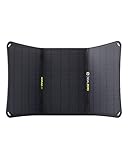
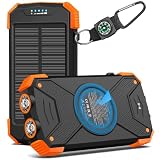
Quick answer
the BigBlue 28W Solar Charger is our #1 pick (best folding solar charger). Buy this folding USB panel when you want the most headroom for clouds, short days and a power bank waiting to be filled.
On this page
- 1. Best Solar Power Bank: The Short Answer
- 2. The best solar power banks and solar chargers right now
- 3. Solar Power Bank Side by Side
- 4. How Does Solar Phone Charging Actually Work?
- 5. Is a Built-In Solar Panel Better Than a Folding Panel?
- 6. How Many Phone Charges Can a Solar Charger Deliver in a Day?
- 7. How Do You Size a Solar Panel and Power Bank Together?
- 8. How Do You Get the Most Output From a Solar Charger?
- 9. Which Solar Setup Works for Power Outages, Hiking and Car Camping?
- 10. When Should You Buy a Power Station Instead of a Solar Power Bank?
- 11. Which Solar Charger Should You Buy?
- 12. Common Mistakes to Avoid
- 13. Frequently Asked Questions
1. Best Solar Power Bank: The Short Answer
Buy the BigBlue 28W Solar Charger and the Anker 335 Power Bank 20000mAh as a pair: the panel collects, the bank stores, and the phone charges from the bank at night. Backpackers should swap in the lighter Anker 21W, emergency kits can use the cheaper Nekteck 21W, and the BioLite SolarPanel 10+ is the one all-in-one with a sensible ratio. Treat a built-in cell, like the BLAVOR’s, as an emergency trickle. Ratings below are the makers’ figures.
| Product | Best For | Solar | Battery |
|---|---|---|---|
| BigBlue 28W | Filling a bank fast | 28W folding | None |
| Anker 21W | Light backpacking | 21W folding | None |
| Nekteck 21W | Emergency kits | 21W folding | None |
| Goal Zero Nomad 20 | Goal Zero owners | 20W with kickstand | None |
| BioLite SolarPanel 10+ | All-in-one day trips | 10W with kickstand | 3,200mAh |
| BLAVOR 10000mAh | Rugged pocket bank | Small built-in cell | 10,000mAh |
| Anker 335 | Pairing with a panel | None | 20,000mAh |
2. The best solar power banks and solar chargers right now

1. BigBlue 28W Solar Charger
See current price · Best for: Folding Solar Charger
- Features
- 28W folding USB panel, 3 USB ports, SunPower cells
For years BigBlue’s 28W panel has been a go-to solar powered cell phone charger, and the reason is plain: it has more panel area than the 21W models, so it keeps more in reserve when the sun is weak. BigBlue lists SunPower cells and three USB-A ports. No USB panel passes its full rating through a phone cable, though. The 28W figure describes the cells under ideal lab light; after heat, angle and the 5V regulator, real output commonly settles at about half to two-thirds of it. Even so, this is the strongest tool here for the job that counts, filling a 10,000-20,000mAh bank over a long sunny day. Face it at the sun, plug a bank into it instead of your phone, and top the phone up from the bank in the evening. If a laptop needs USB-C Power Delivery, this panel is the wrong tool; look at a power station instead.
Pros
- Highest rated output of the phone-sized folding panels on this list
- Uses SunPower cells, from a well-regarded cell maker
- Three USB ports, so a bank and a phone can charge at the same time
- Folds to roughly book size, with loops for strapping it to a pack
- Sold for years and easy to find
Cons
- The classic version has USB-A outputs only, so there is no USB-C fast charging
- Bulkier and heavier than panels in the 21W class
- Delivers well under its 28W rating outdoors, as every panel does
2. Anker PowerPort Solar 21W Solar Charger
See current price · Best for: Lightweight Folding Panel
- Current
- 2 USB-A ports
- Features
- 21W folding USB panel
Anker’s 21W folder is the lighter option next to the BigBlue, and many backpackers will find it the easier panel to carry. Anker lists two USB-A ports with PowerIQ detection, SunPower cells and a fold-flat fabric body with grommets for hanging it from a pack or tent. What you give up is margin. At a 21W rating, figure on something in the high single digits to low teens of real watts in good sun: enough to charge a phone directly under a clear sky, with less slack when clouds drift through or the sun sits low. The remedy is the one that applies to every panel here: charge a power bank, not the phone. The bank irons out the dips that make a phone stop and restart charging, and it stores the midday harvest for the night. To fill a 20,000mAh bank every day, move up to the 28W class; for a single phone on weekend trips, this panel is plenty.
Pros
- Slim and light enough to ride on a daypack
- Two USB-A ports with Anker’s PowerIQ charging
- SunPower cells, according to Anker’s listing
- A simple, proven design from a mainstream maker
Cons
- USB-A only, with no USB-C output
- Less margin than a 28W panel in haze or low winter sun
- Listed under several Anker model names, which muddles searches
3. Nekteck 21W Solar Charger
See current price · Best for: Budget Folding Panel
- Current
- 2 USB-A ports
- Features
- 21W folding USB panel
Nekteck’s 21W panel offers the Anker’s basic formula for less money: a fold-out fabric panel, two USB-A ports and loops for hanging it in the sun. For an outage kit or a car emergency bag that might come out twice a year, that is the right budget, because the rating and the physics are the same across the class. The savings come out of brand depth and accessory polish, not watts. Set expectations the same way as for any 21W panel: in strong, direct sun it charges one phone, and in mixed weather it fills a bank slowly. Pack it with a charged 10,000mAh power bank and a short cable and you have a solar portable charger that can keep a phone going through a multi-day outage, provided you get a few hours of decent sun. If it will hang off a pack every weekend, the Anker or BigBlue is worth the extra money.
Pros
- Typically priced near the bottom of the 21W class
- Two USB-A ports
- The same fold-out, hang-it-up format as costlier panels
- A smart spare for a glovebox or emergency kit
Cons
- A less-known brand with a thinner support network
- USB-A only
- Shares the real-world output limits of every 21W panel
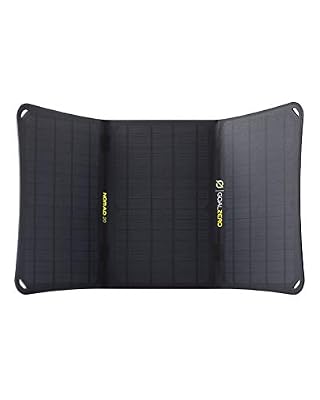
4. Goal Zero Nomad 20 Solar Panel
See current price · Best for: Most Rugged Panel
- Features
- 20W folding panel, USB plus 8mm output, built-in kickstand
Of all the panels here, the Nomad 20 is the one designed as part of a system. Goal Zero rates it at 20W and builds in a kickstand, which matters more than it seems: a panel tilted toward the sun produces noticeably more than one lying flat, and most fabric folders have to be hung or propped on whatever is at hand. Alongside the USB port for phones and banks, it carries an 8mm output that plugs into Goal Zero’s Sherpa power banks and small Yeti stations, and Nomads are designed to chain together when you need more input. That makes it the stepping stone if a small power station might follow your phone setup. The costs are weight and price; per watt it runs higher than a BigBlue or Anker. If a phone is all you will ever charge, the cheaper fabric panels do the same work. If you want a panel that stands up properly on a tailgate or a rock, choose this one.
Pros
- Integrated kickstand makes pointing it at the sun simple
- Feels sturdier than fabric-only folders
- Also connects to Goal Zero power banks and small stations
- Can be chained with other Nomad panels for more watts
Cons
- Weighs more than fabric 21W panels
- Generally costs more than generic panels of similar wattage
- The ecosystem perks only help if you own Goal Zero gear
5. BioLite SolarPanel 10+ Solar Charger
See current price · Best for: Panel With a Battery
- Features
- 10W panel with built-in 3,200mAh battery and kickstand
For the convenience of a solar power bank without the make-believe, the BioLite SolarPanel 10+ is the honest choice. It is not a large battery with a token cell; it is a genuine 10W panel backed by a small 3,200mAh battery. That battery earns its place twice: it keeps current flowing to the phone when a cloud passes, so charging does not cut out, and it stores part of the afternoon’s harvest for later. BioLite adds a kickstand and a little sundial so you can face the panel squarely at the sun, which is the easiest free gain in solar charging. Keep the scale in view, though. Ten watts of panel charges slowly, and 3,200mAh falls short of a full charge for most current phones. It suits a solo hiker on day trips or a short overnight; for longer outings, a 21W or 28W panel with a separate 10,000mAh bank gives you more for similar money.
Pros
- The built-in battery rides out clouds and saves a little charge for night
- Integrated kickstand plus a sundial for aiming
- Slim, rigid single-panel build
- A sensible balance between panel area and battery size
Cons
- Just 10W of panel, so charging is slow outside strong sun
- The 3,200mAh battery holds well under one charge for a modern phone
- Costs more than a plain 21W folder plus an inexpensive bank
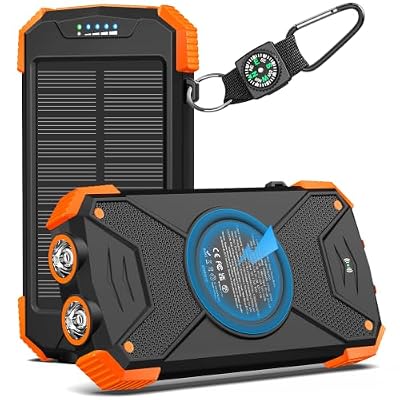
6. BLAVOR Solar Power Bank 10000mAh
See current price · Best for: Built-In Solar Power Bank
- Features
- 10,000mAh bank, Qi wireless, USB-C, small built-in solar cell
BLAVOR is among the better-known integrated solar power bank brands, and this 10,000mAh model is a fair purchase if you buy it for the right reason. As a power bank it does well: a rugged shell, a wireless charging pad, USB-C plus USB-A, and a flashlight that earns its keep in a blackout. As a solar charger it is weak, and that comes down to physics rather than anything BLAVOR got wrong. A cell the size of a phone makes on the order of a watt or two in ideal sun, while a 10,000mAh bank holds about 37Wh. Even before losses, filling it takes dozens of hours of perfect sun, which in real life means several days on a dashboard or windowsill. Use the cell to win back a little charge when nothing else is available, charge the bank from the wall or a folding panel the rest of the time, and it will serve you well.
Pros
- Tough rubberized shell that fits a pocket or glovebox
- Qi wireless charging pad on top
- A USB-C port next to USB-A
- Built-in flashlight for outages
Cons
- The solar cell is tiny, so a full solar recharge takes days of direct sun
- Charging it in the sun also heats the battery
- Wireless charging loses more energy than a cable
7. Anker 335 Power Bank 20000mAh
See current price · Best for: Bank to Pair With a Panel
- Features
- 20,000mAh USB-C power bank, no solar cell
This is the product that makes a folding panel worth owning. The Anker 335 is a plain 20,000mAh power bank with USB-C and USB-A and no solar cell whatsoever, which is exactly the point. Connected to a 21W or 28W folding panel, it absorbs the midday harvest while you hike or wait out an outage, then charges your phone at full speed over a cable at night, without the start-stop behavior of charging straight from a panel. At roughly 74Wh nominal, a full bank holds about three to four charges for most current phones once conversion losses are counted: a long weekend of normal use, or several days of careful use in an outage. Filling it from empty takes a full sunny day on a 28W panel, so in practice you add a third or half at a time. For laptop charging, step up to a USB-C PD bank instead.
Pros
- Double the capacity of a typical solar power bank
- USB-C and USB-A outputs
- Takes a folding panel’s USB output for charging during the day
- From a brand with a long track record in power banks
Cons
- No solar cell, so it relies on a panel or an outlet to refill
- Heavier than a 10,000mAh bank
- Not a laptop-class bank
3. Solar Power Bank Side by Side
| Product | Score | Price | Features | Buy |
|---|---|---|---|---|
| BigBlue 28W Solar Charger Best Folding Solar Charger | 93 | See current price | 28W folding USB panel, 3 USB ports, SunPower cells | Amazon → |
| Anker PowerPort Solar 21W Solar Charger Best Lightweight Folding Panel | 91 | See current price | 21W folding USB panel | Amazon → |
| Nekteck 21W Solar Charger Best Budget Folding Panel | 88 | See current price | 21W folding USB panel | Amazon → |
| Goal Zero Nomad 20 Solar Panel Most Rugged Panel | 85 | See current price | 20W folding panel, USB plus 8mm output, built-in kickstand | Amazon → |
| BioLite SolarPanel 10+ Solar Charger Best Panel With a Battery | 83 | See current price | 10W panel with built-in 3,200mAh battery and kickstand | Amazon → |
| BLAVOR Solar Power Bank 10000mAh Best Built-In Solar Power Bank | 81 | See current price | 10,000mAh bank, Qi wireless, USB-C, small built-in solar cell | Amazon → |
| Anker 335 Power Bank 20000mAh Best Bank to Pair With a Panel | 78 | See current price | 20,000mAh USB-C power bank, no solar cell | Amazon → |
4. How Does Solar Phone Charging Actually Work?
A solar charger turns sunlight into a few watts of electricity and pushes them through a USB regulator at 5 volts, whether it is a folding panel or a solar power bank charger with cells on the lid. The number printed on the box is the panel’s rating under standard lab light, which is bright, cool and perfectly aimed. Outdoors you seldom get all three together, so real output always lands below the label.
How much energy does a phone need?
Most current phones carry somewhere around 12-20 watt-hours of battery. Power banks are rated in milliamp-hours at a cell voltage of about 3.7V, which puts a 10,000mAh bank at roughly 37Wh and a 20,000mAh bank at roughly 74Wh. Once conversion losses are counted, a 10,000mAh bank usually delivers one and a half to two full phone charges, and a 20,000mAh bank three to four. Those are the figures sunlight has to replace.
How much energy does the sun deliver in a day?
The handiest planning unit is the peak sun hour: one hour of light at the intensity panels are rated against. A clear summer day across much of the U.S. supplies four to six peak sun hours, while winter and cloudy days may give only one or two. Multiply the panel’s watts by the peak sun hours, take off about a third for heat, angle and USB conversion, and what is left is a realistic daily harvest.
Why is a folding panel about ten times better?
Apply that to a 21W folding panel on a decent summer day: 21W times five sun hours is 105Wh on paper, or about 50-70Wh at the USB port. That is enough to fill a 10,000mAh bank and still charge a phone. Apply it to a solar power bank whose built-in cell produces one to two watts and the same day yields perhaps 5-10Wh, before the heat of sitting in direct sun starts working against the battery.
That gap, roughly ten to one, explains the whole category. It is why the picks lean toward folding panels and batteries, with only one integrated solar power bank on the list. For the broader question of keeping devices alive when the grid fails, our guide to the best portable chargers for power outages covers batteries without the solar angle.
5. Is a Built-In Solar Panel Better Than a Folding Panel?
No. A folding panel paired with a separate bank beats a built-in cell on output, battery life and flexibility. When people search for a solar portable charger, the integrated solar power bank is usually what they picture, and it is the version most likely to let them down. The appeal is easy to see: one object, no cables, leave it on the dashboard and forget it. The trouble is surface area. A cell the size of a phone screen cannot gather much light, and no cell technology closes that gap. Manufacturers generally admit as much in the fine print, where solar input is described as an emergency or backup feature.
Why does heat matter so much?
Heat is the quieter problem. Lithium cells dislike high temperatures, yet the place a solar power bank charges best is hot, direct sun, often a car dashboard that climbs far past what battery makers recommend. You end up trading battery lifespan for a trickle of charge. A folding panel sidesteps that, because the battery waits in the shade at the end of a cable while the panel takes the heat.
What does a panel-and-bank pair fix?
Splitting the job solves both problems at once. The panel can be ten to twenty times the size of a built-in cell and still fold to roughly the size of a hardcover book, while the bank can be whatever capacity suits you. Each half can also be replaced on its own: when the battery wears out after a few hundred cycles, the panel keeps working, and if you later buy a small power station, a good USB panel still has a job to do.
THE RULE
Let the panel catch the sun and the bank carry the night.
Count a built-in cell as a bonus, never as the charging plan. If solar is the reason you are shopping, budget for a 21-28W folding panel and a 10,000-20,000mAh bank, and charge the phone from the bank.
Where do the two hybrids fit?
The two hybrids on this list sit at opposite ends. The BioLite pairs a real panel with a small battery, so it is a genuine solar system, just a modest one. The BLAVOR pairs a real battery with a token panel, so it is a power bank with a solar emergency mode. Both are sound products that answer different questions, and the BLAVOR is the one shoppers most often buy while expecting it to behave like the BioLite.
That does not make integrated solar banks useless. As rugged, pocketable batteries with a flashlight and a last-resort trickle, they do the job, and the BLAVOR among the picks is a good one. Just buy them for the battery. If your idea of solar charging includes laptops, CPAP machines or a small fridge, jump ahead: that is power station territory, covered in our guide to the best portable power stations.
6. How Many Phone Charges Can a Solar Charger Deliver in a Day?
On a clear day with the panel aimed reasonably well, a 21W panel puts back roughly one bank or one or two phones, a 28W panel fills a 10,000mAh bank with room to spare, and a built-in cell adds only a small fraction of a charge. Here is how that harvest math plays out across the seven picks. These are estimates from the arithmetic in section 3, not measured results.
- BigBlue 28W: fills a 10,000mAh bank with room to spare.
- Anker 21W: roughly one bank, or one or two phones.
- Nekteck 21W: the same as the other 21W panels.
- Goal Zero Nomad 20: similar to a 21W panel, and easier to aim.
- BioLite SolarPanel 10+: about one phone charge.
- BLAVOR 10000mAh: a small fraction of a charge.
- Anker 335: no solar of its own, but it stores a full day’s harvest from a panel.
How long does a full refill take?
It depends on which half of the system you are filling and from what. A 21W panel comfortably refills a 10,000mAh bank on a strong summer day. Filling the 20,000mAh Anker 335 from empty takes a full sunny day on a 28W panel, so most owners top it up a third or half at a time rather than running it flat. A built-in cell like the BLAVOR’s needs several days of direct sun to fill its 10,000mAh battery, which is why that kind of bank should be charged from the wall or a folding panel whenever you have the choice.
What cuts into the daily total?
Every estimate above assumes clear sky and decent aim. Clouds, a low winter sun, heat building up behind the panel and a panel left lying flat all pull the number down, sometimes sharply. Winter alone can cut the daily harvest to a third of summer’s. The next two sections cover how to size around those losses and how to claw some of them back in the field.
7. How Do You Size a Solar Panel and Power Bank Together?
Size the battery to cover the phone charges you need between sunny days, then choose a panel big enough to refill that battery in one decent day. Getting the order right matters, because a big panel feeding a tiny bank wastes sun, and a big bank behind a small panel never fills.
How big a battery do you need?
For one phone over a weekend, 10,000mAh is plenty. For two people, a week on the trail or a multi-day outage, 20,000mAh is the better starting point. Larger banks exist, but beyond about 26,800mAh you run into airline carry-on limits, and the extra weight starts to make the case for a small power station instead.
How big a panel do you need?
Work from the rough rule that a panel delivers half to two-thirds of its rating at the USB port. On that basis a 21W panel puts back around 50-70Wh on a strong summer day, and a 28W panel proportionally more. So a 21W panel comfortably refills a 10,000mAh bank, while a 20,000mAh bank is a better match for the 28W class, especially in spring and fall when the sun sits lower.
What changes in winter?
More than most people expect. Shorter days and a lower sun angle can cut the daily harvest to a third of summer’s, and a panel lying flat on snow collects far less than one tilted toward the southern sky. If you need dependable solar charging from November to February, buy the bigger panel and spend time aiming it; the BigBlue 28W, or a Nomad 20 propped on its kickstand, is the realistic minimum.
Do cables and extra ports matter?
Yes. USB-A panels push 5V, and at that low voltage a long, thin cable loses a surprising share of the power. Run a short, decent cable from panel to bank. And if a panel has two or three ports, do not assume they add up to more total power; most share the same panel output and simply split it between them.
Rough Energy Math
~37Wh
10,000mAh bank, nominal
~74Wh
20,000mAh bank, nominal
12-20Wh
Typical phone battery
4-6
Peak sun hours, clear summer day
What about panels bigger than 30W?
They belong to a different category. Past about 30W, panels are built to feed power stations through 12V or higher-voltage DC connectors rather than USB, so they do not fit a phone-and-power-bank setup. Our roundup of the best portable solar panels covers them, and matching them with batteries is explained in our solar generator guide.
8. How Do You Get the Most Output From a Solar Charger?
Point it at the sun, keep it cool, keep it out from behind glass, and charge a bank instead of the phone. Those four habits make a bigger difference than the choice between most panels on this list.
Aim the panel
The angle between panel and sun is the biggest variable you control. A panel laid flat at midday in summer does reasonably well; laid flat in the morning, in the afternoon or at any time in winter, it can lose a large share of its output. Prop it so it faces the sun squarely, and re-aim it every hour or two if you are staying put. Kickstand designs such as the Nomad 20 and the BioLite make this easy.
Keep the panel cool and the battery cooler
Solar cells lose efficiency as they warm up, so a panel with air moving behind it beats one lying on hot asphalt or a dark car roof. The battery belongs in the shade, ideally in a pack pocket or under the panel itself. Charging lithium batteries in high heat shortens their life, and this is where the integrated solar bank looks worst.
Never charge through glass
A windshield or window filters and reflects enough light to cut output badly, and the inside of a car gets hot. A panel hung on the outside of a pack, clipped to a tent or laid on a camp chair facing the sun will outperform any setup behind glass.
Charge the bank, not the phone
When a cloud passes, panel voltage sags, and many phones stop charging and never restart on their own when the sun comes back. A power bank in the middle soaks up those dips, and the phone then charges at full speed from the bank when you plug it in. That single habit turns a frustrating panel into a useful one.
Plan for partial days
Expect partial results and plan around them. A day of broken cloud might return a quarter of a bank; a perfect day might fill it. Owners who are happy with solar chargers tend to treat them as a steady top-up against slow drain, keep their phones in low-power mode, and never expect a panel to match a wall outlet. Owners who are unhappy have usually bought a solar power bank and left it on a windowsill.
9. Which Solar Setup Works for Power Outages, Hiking and Car Camping?
In an outage the battery matters most, on the trail weight and setup time decide, and car camping can carry the biggest panel and bank on this list. The same two-part system works in all three; only the proportions change.
Power outages
Most outages end within a day or two, and a charged 20,000mAh bank on its own covers that for a phone or two. Solar earns its spot in the longer outages that follow storms, when the grid is down for days and the gas station is closed as well. Keep the bank charged on a schedule, store the panel beside it, and the pair becomes a phone-and-radio lifeline that needs no fuel.
Think about light while you are building the kit. A USB-rechargeable lantern can run from the same bank and panel, and it lights a room far better than a phone flashlight. Our guide to the best emergency lanterns covers models that charge over USB and pair neatly with any panel here. A battery-powered fan is the other common load in a summer outage, but fans draw far more than a 21W panel can keep up with.
Backpacking and thru-hiking
On the trail, weight and setup time take over. A 21W fabric panel strapped to the back of a pack charges slowly while you walk, because its angle is constantly wrong, but it collects far more at camp in the afternoon once you can aim it. Most thru-hikers who carry solar follow exactly that pattern, and plenty skip solar altogether in favor of a bigger bank and outlets in resupply towns. Either approach is reasonable.
Car camping
Car camping is the easy case. Weight hardly matters, a panel can lean on the picnic table, and a 28W panel with a 20,000mAh bank handles phones, headlamps and a small speaker without strain. Once a 12V fridge or a CPAP joins the list, though, you have left power-bank territory, and the realistic answer is a power station from our guide to the best portable power stations for camping.
10. When Should You Buy a Power Station Instead of a Solar Power Bank?
Buy a power station as soon as your list includes a laptop that wants 60W or more over USB-C, a CPAP machine, a router running through a long outage, or anything with a wall plug. A solar panel battery bank setup is a phone tool. Its ceiling is set by USB-A output and a battery measured in tens of watt-hours, while those loads need a battery measured in hundreds of watt-hours and a panel of a hundred watts or more.
What about laptops?
Laptops are the first wall people run into. Some larger power banks deliver 65-100W of USB-C Power Delivery and can charge most laptops. No folding USB-A panel can recharge a 25,000mAh laptop bank in a reasonable time, though, so if you need laptop power off-grid for days, a small power station with a 100W panel is the practical route.
What about a CPAP or other medical device?
Medical devices are the second wall. A CPAP running all night can use more energy than a 20,000mAh bank holds, depending on the machine and whether the humidifier is switched on. Do not count on power banks for that job. Our guide to the best battery backup for CPAP explains how to size one properly.
The good news is that everything you learn here carries over. The lessons about sun hours, aiming, heat and buffering through a battery apply just as much to a 200W panel feeding a power station; only the numbers get bigger. Start with the best portable power stations if you are moving up, and come back here for the small panel that rides along for phones.
11. Which Solar Charger Should You Buy?
For most people: pair the BigBlue 28W Solar Charger with the Anker 335 Power Bank 20000mAh. Together they make the most capable phone-scale solar system on this list, they cope with clouds and shorter days better than anything in the 21W class, and either half can be replaced on its own. Choose this pairing for car camping, a multi-day outage kit, or a family trying to keep several phones charged.
For backpackers: the Anker PowerPort Solar 21W with any 10,000mAh bank you like. It is lighter and smaller, and it is enough for one phone on trips where you can aim the panel at camp. If you would rather carry a single object and can accept a smaller system, the BioLite SolarPanel 10+ is the one all-in-one that gets the panel-to-battery ratio right.
For a budget emergency kit: the Nekteck 21W with any charged 10,000-20,000mAh bank. It will spend most of its life in a drawer, so paying for brand polish makes little sense. Check the bank every few months and top it up so it is full on the day you need it.
For Goal Zero owners, or anyone who wants a stand: the Goal Zero Nomad 20. Its kickstand makes proper aiming effortless, and the 8mm output lets it feed a small Goal Zero station if you add one later. For a rugged pocket bank: the BLAVOR Solar Power Bank 10000mAh, bought for its battery, wireless pad and flashlight, with the solar cell treated as an emergency trickle and nothing more.
What should you skip?
Skip the large-capacity power banks covered in tiny fold-out solar petals that promise solar charging for 25,000mAh or more. Their panels are still small, their batteries are big, and the mismatch turns every solar refill into a multi-day project. A plain bank and a separate 21-28W panel do the same job far better for similar money.
12. Common Mistakes to Avoid
Treating a solar power bank as your whole solar plan
The phone-sized cell on a solar power bank makes roughly a watt or two in perfect sun, so it needs days to fill a 10,000mAh bank. Buy that kind of bank for its battery, and add a 21-28W folding panel if you truly need to recharge from sunlight.
Plugging the phone straight into the panel
When a cloud drags panel voltage down, many phones stop charging and stay stopped after the sun returns. Run the panel into a power bank, then charge the phone from the bank. The bank smooths out those dips and holds the midday harvest until night, when the phone actually needs it.
Charging behind the windshield
Car glass blocks a real share of the light the cells need, and a dashboard gets hot enough to stress lithium batteries. Set the panel outside the car, facing the sun, and keep the battery shaded. Charging behind glass means less energy and more battery wear at the same time.
Leaving the panel lying flat
A flat panel gives up a large share of its output in the morning, in the afternoon and all through winter. Tilt it to face the sun squarely and re-aim it every hour or two when you can. A kickstand, or a panel propped against a pack, is the cheapest output upgrade available.
Expecting USB solar to run a laptop or CPAP
Folding USB-A panels and phone-sized banks are made for phones, earbuds and headlamps. A laptop or CPAP needs a battery measured in hundreds of watt-hours and a panel of 100W or more. If either load is on your list, start with a small power station rather than a bigger power bank.
13. Frequently Asked Questions
Do solar power banks actually work?
As batteries, yes; as solar chargers, only as a slow trickle. A cell built into the case makes roughly a watt or two in ideal sun, so refilling a 10,000mAh bank from solar alone takes days of direct light. For solar charging that keeps up, run a separate 21-28W folding panel into a plain power bank during the day.
How long does it take to charge a solar power bank in the sun?
From empty, a built-in cell needs several days of direct sun to fill a 10,000mAh bank, which is why manufacturers call solar a backup feature. Feed the same bank from a 21W folding panel and one clear summer day is usually enough. Clouds, low winter sun and careless aiming can stretch either figure a long way.
What size solar panel do I need to charge a phone?
Treat 21W as the practical floor for charging a phone in a sensible time; a folding panel that size usually refills a 10,000mAh bank on a good summer day. Move up to the 28W class for a 20,000mAh bank, two people or winter use. Panels under about 10W are slow and only suit light, occasional top-ups.
Can I charge my phone directly from a solar panel?
Yes, while the sun is steady and direct. Passing clouds are the catch: when panel voltage sags, many phones quit charging and do not start again by themselves. Putting a power bank between panel and phone avoids that, keeps the flow steady, and lets you charge the phone at full speed from the bank after dark.
Is it safe to leave a solar power bank in a hot car?
It is a bad idea. Heat speeds up lithium battery aging, and a dashboard in summer sun can run far hotter than battery makers advise. That is one of the best reasons to choose a folding panel instead: the panel sits in the sun while the battery stays shaded at the other end of a cable.
How many phone charges does a 20,000mAh power bank give?
A 20,000mAh bank holds about 74Wh nominal. Conversion losses mean most deliver roughly 60-70% of that at the port, which works out to about three to four full charges for a typical current phone. Phones with larger batteries land toward the low end of that range, and older or smaller phones toward the high end.
Are solar chargers worth it for power outages?
For short outages, a charged power bank usually covers you and solar adds little. After major storms, when outages run long, a folding panel with a 20,000mAh bank can keep phones and a radio running indefinitely on a few hours of sun a day. Bigger loads, such as a fridge or CPAP, call for a power station.
Related Guides
Portable Power Stations
Best Portable Power Station
The EcoFlow DELTA 2 LFP tops 7 portable power stations; a 1,000Wh unit runs a typical fridge about 6 to 14 hours, and LiFePO4 is rated for 3,000+ cycles.
Solar Generators & Panels
Best Portable Solar Panel
The EcoFlow 220W Bifacial is the top portable solar panel pick; 7 panels compared on connectors and Voc, and most deliver 60 to 80% of rated watts at midday.
Power Banks & Chargers
Best Portable Chargers for Power Outages
The Anker 737 PowerCore 24K is the best portable charger for most outages, good for 3 to 4 phone charges; 6 picks from power banks to 1 kWh power stations.
The Bottom Line
For most people the best solar power bank is a pair of products: a 21-28W folding panel to gather sunlight and a plain 10,000-20,000mAh bank to hold it. The BigBlue 28W with an Anker 335 is the combination we would choose for most buyers; backpackers should look at the Anker 21W, and the BioLite SolarPanel 10+ is the one all-in-one with a sensible panel-to-battery ratio.
Integrated solar power banks such as the BLAVOR are good batteries carrying a token solar cell, so buy them for the battery and the flashlight rather than the sun. If laptops, a CPAP or a fridge are on your list, go straight to a power station and a proper panel.